
Attic Insulation Removal: The Scope-First Guide (Tools, Vacuum Methods, Cleanup, and Safe Next Steps)
What This Page Covers / Doesn’t Cover
Covers:
Attic insulation removal basics, attic insulation removal vacuum reality, attic insulation removal tools, how to remove blown-in insulation, and how to clean attic after insulation removal with verification.
Doesn’t cover:
Identification of hazardous materials or medical advice. If you suspect hazardous insulation or heavy contamination, stop and use qualified help.
When removal turns into a full reset, reviewing the cost to replace attic insulation helps you price the whole project—not just the messy part.
Evidence Snapshot (Why Order and Safety Matter)
- Seal-first order: ENERGY STAR’s attic insulation project notes EPA recommends air sealing the attic before adding attic insulation.
- Moisture timeline: EPA says if wet/damp materials are dried within 24–48 hours, in most cases mold will not grow.
- Respirator spec: NIOSH guidance for fibrous glass dust includes N95 / R95 / P95 particulate respirators in certain scenarios (APF guidance).
Deep Niche Audit: What Was Missing (and What This Fixes)
Refinements Added
- Cleaner safety sourcing: OSHA fiberglass irritation guidance + NIOSH respirator specs used correctly.
- Sharper vacuum section: DIY shop-vac limits vs professional removal vacuum systems clarified.
- Better scannability: Step-by-step workflow, pass/fail stop points, cleanup verification standard.
- Operator language: Clear decision logic instead of generic how-to fluff.
Micro-perspective:
Winning content here doesn’t just explain removal—it helps you avoid dust chaos and reinstalling without sealing.
First: What “Attic Insulation Removal” Actually Means
Attic insulation removal is a sequence, not a single task:
- Protect the home (dust control, staging, PPE)
- Remove insulation (vacuum blown-in or pull batts/rolls)
- Clean + reset (debris, droppings, residue, odor sources)
- Verify (photos, boundary cleared, exception log)
- Next step (air seal first, then reinsulate—if planned)
Operator truth:
Don’t buy a number. Buy scope.
When Removal Is the Right Move (and When It’s Wasted Work)
Removal Is Usually the Right Move When
- You need a clear attic floor to air seal properly
- Insulation is wet or stayed wet long enough to matter (timing matters)
- Pest contamination exists (droppings, nesting, odor)
- Insulation is matted, compacted, or displaced
- You want a clean baseline so reinstall work is verifiable
If removal is only step one, use the attic insulation replacement decision rules to avoid reinstalling over unresolved problems.
Removal Is Often Wasted When
- The attic is dry/clean and air seal + top-off would work
- You remove insulation but don’t fix the cause (leak, venting, condensation)
- You remove and reinstall without protecting ventilation paths
Micro-perspective:
A clean attic doesn’t matter if airflow and moisture behavior stay broken.
Safety and PPE (What’s Actually Supported)
Fiberglass handling is mainly about irritation (skin, eyes, respiratory tract).
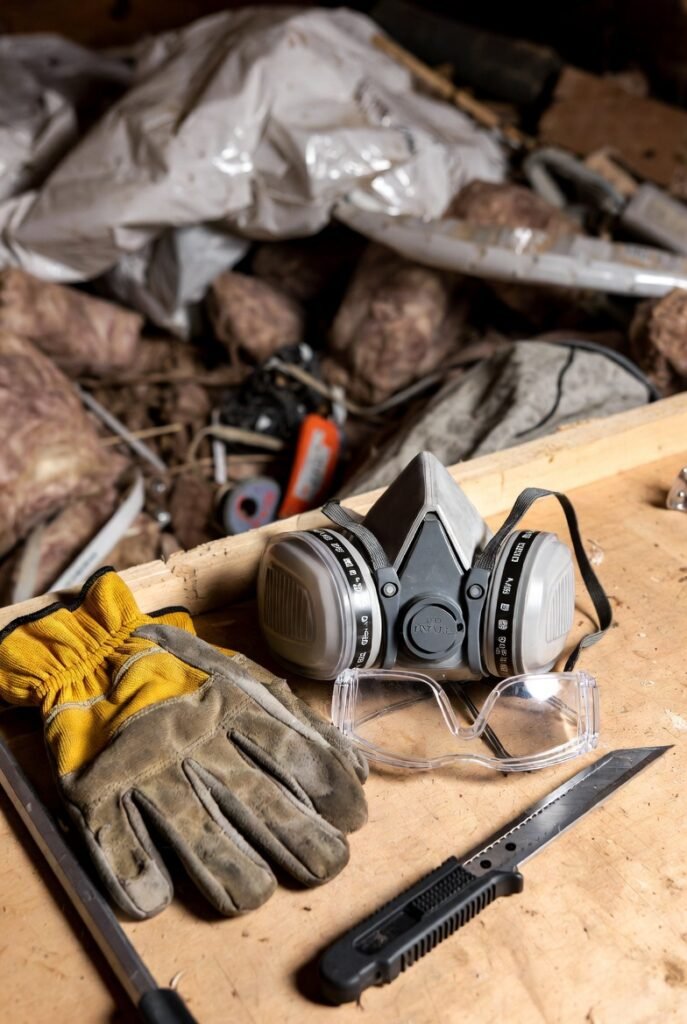
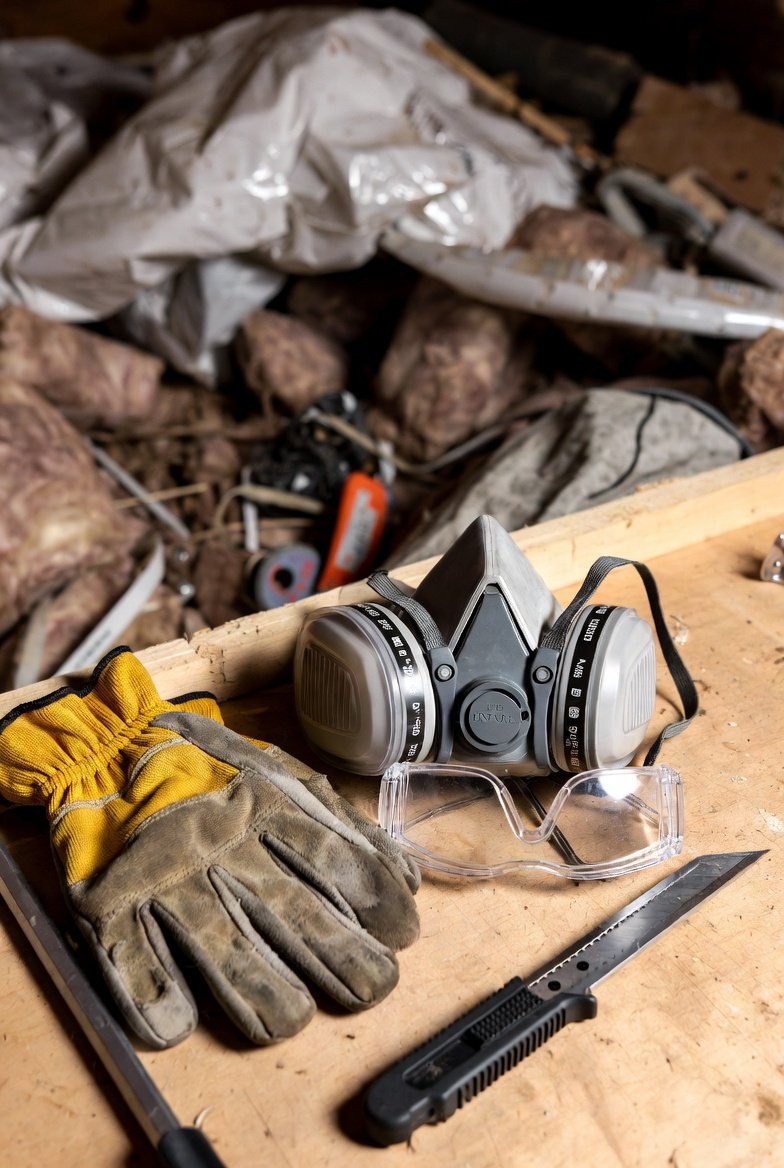
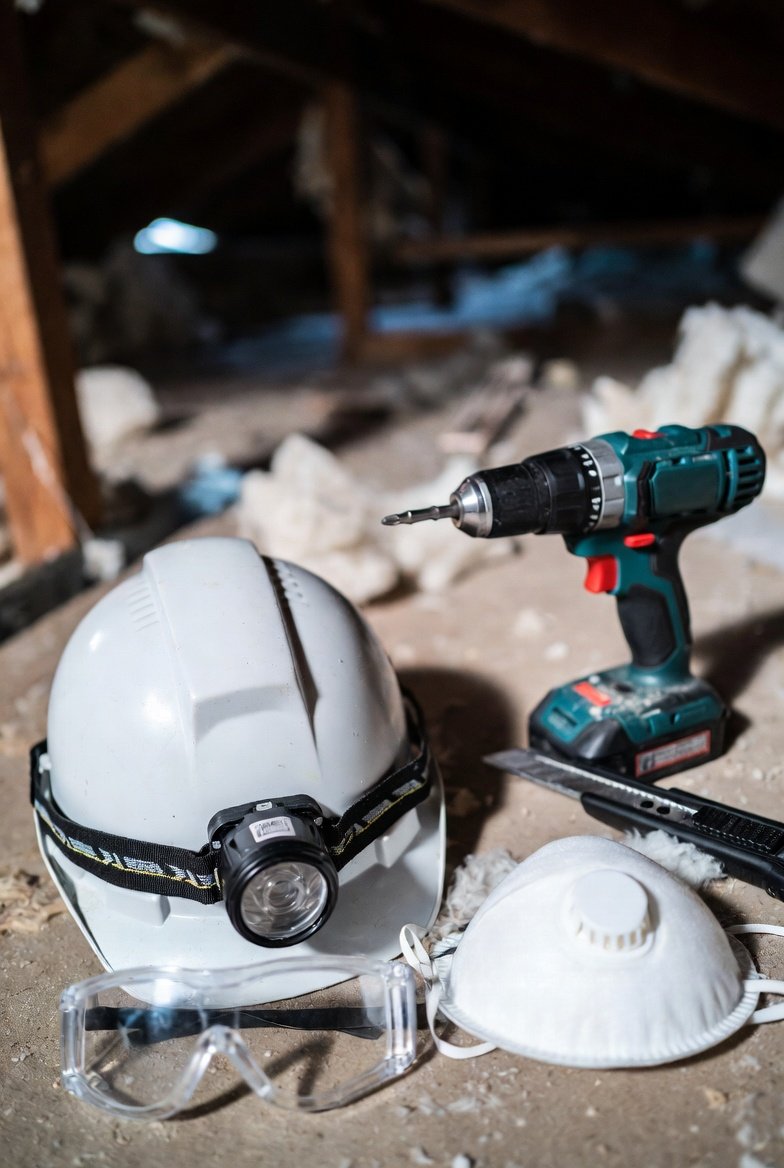
Minimum PPE for Most DIY Removal
- Long sleeves + long pants + gloves + head covering
- Eye protection (goggles are worth it)
- Respiratory protection: N95 / R95 / P95 particulate respirator (NIOSH guidance)
Operator truth:
If you can smell musty air or feel fibers in your throat, dust control is already failing.
Attic Insulation Removal Tools (The Real Kit)
Core Tools (No Gimmicks)
- Headlamp + spare batteries
- Heavy-duty contractor bags
- Flat shovel / scoop / dustpan
- Utility knife (for batts/rolls)
- Wide push broom / soft rake
- Shop vacuum (HEPA-type preferred) for surface cleanup, not bulk removal
- Plastic sheeting + painter’s tape (dust barrier)
- Permanent marker + simple zone map (paper)
Optional Sanity-Savers
- Knee pads
- Disposable coveralls
- 2×4 walk boards (step safety matters)
Micro-perspective:
Tools matter less than method. Method prevents “half-clean everywhere.”
Attic Insulation Removal Vacuum: Reality Check
This is one of the biggest SERP sub-intents.
What Homeowners Think It Means
“A vacuum I can buy and finish the job in a few hours.”
What It Often Actually Means
A professional high-capacity insulation removal vacuum designed for bulk blown-in insulation.
DIY Reality (Plain and Honest)
- A shop-vac helps with edges, spot cleanup, and final dust
- It’s usually not efficient for full blown-in removal
- Full blown-in removal without pro equipment becomes a time + dust marathon
Operator truth:
If you’re removing a full attic of blown-in, your vacuum plan is the project plan.
How to Remove Blown-In Insulation (Step-by-Step Workflow)
Step 1: Define Your Boundary
Choose one:
- Targeted removal: wet/contaminated zones + sealing paths
- Full removal: entire attic floor
Operator truth:
Targeted removal is often smarter—less mess, same sealing benefit.
Step 2: Dust Control Before Touching Insulation
- Seal attic hatch with plastic sheeting
- Turn off HVAC systems that could pull dust
- Stage bags at the hatch (don’t drag fibers through the house)
Step 3: Work in Zones (Never Random Wandering)
Clear one zone at a time:
- Remove bulk
- Bag immediately
- Vacuum surface dust
- Photograph cleared zone
- Move to the next
Micro-perspective:
Zone work is how you finish clean—without mystery piles.
Step 4: Bulk First, Detail Second
- Bulk: clear down to attic floor (watch wires/fixtures)
- Detail: corners, penetrations, eaves
Step 5: Stop Points (When DIY Should Pause)
Stop if you find:
- Persistent wetness or active leaks
- Strong, widespread odor you can’t isolate
- Heavy contamination everywhere
- Dust control failure
- Unsafe movement conditions
Operator truth:
The goal is a safe, verifiable result, not a heroic weekend.
Proof Block: Removal → Air Seal → Reinsulate
ENERGY STAR notes EPA recommends air sealing the attic before adding attic insulation.
Operator meaning:
If you remove insulation and reinstall without sealing bypasses, comfort problems usually stay—just hidden.
Operator Mistake → Consequence → Fix
Mistake
Homeowner removes insulation, “cleans enough,” and reinsulates immediately—no moisture check, no drying window.
Consequence
Musty odor returns after rain or humidity spike. EPA’s 24–48 hour drying guideline was ignored.
Fix
- Identify and fix moisture source
- Dry completely (use 24–48 hr rule as urgency cue)
- Remove affected sections
- Air seal first
- Verify ventilation paths before final depth
Micro-perspective:
New insulation hides old problems fast. Verification is everything.
How to Clean Attic After Insulation Removal (Done Means Done)
Minimum Cleanup Checklist
- All insulation removed from defined boundary
- No debris piles behind platforms or corners
- All bag fragments removed
- Surface vacuumed where practical
- Hatch area cleaned
Verification Checklist (Professional-Grade)
- Before photos
- During photos (zones)
- After photos (bays, corners, perimeter)
- Bag count (rough)
- Exception log (what wasn’t removed and why)
Operator truth:
If you can’t verify it, you can’t compare it—DIY or pro.Point of No Return for DIY Removal
DIY Is Usually Reasonable When
- Targeted removal only
- Attic is dry/clean
- Access is straightforward
- Dust control is working
DIY Becomes High-Risk When
- Full blown-in removal without pro equipment
- Heavy contamination
- Moisture behavior unresolved
- Living space dust exposure risk
Micro-perspective:
Stop when cleanup risk > savings.Quick Verdict (1 Sentence)
Remove insulation in zones, control dust, verify cleanup with photos, then air seal before reinsulating—because seal-first is the order ENERGY STAR points homeowners toward.
Conclusion: Decision Matrix
Best overall:
Targeted removal + verified cleanup + air sealing + reinsulation (scope written, photos, ventilation protected).Best value:
DIY targeted removal + cleanup verification, then hire a pro only for what you can’t do cleanly (bulk blown-in vacuuming).Highest risk:
Full DIY removal in a damp attic without a drying plan—EPA’s 24–48 hour rule is the urgency trigger. - Before reinstalling, confirm target depth using the attic insulation R-value chart so cleanup effort actually pays off.