
Cost to Replace Attic Insulation: What You’ll Actually Pay (and What a Legit Quote Includes)
What This Page Covers / Doesn’t Cover
Covers:
The real cost to replace attic insulation (removal + install), what drives price, what a legitimate quote must include, hidden costs, and how to compare 3 bids safely.
Doesn’t cover:
City-by-city pricing tables, brand recommendations, or medical advice. If you suspect contamination or unsafe materials, treat it as a safety issue and use qualified help.
Deep SERP Sanity Check: What’s Working vs What’s Not
What’s Working (and Why It Ranks)
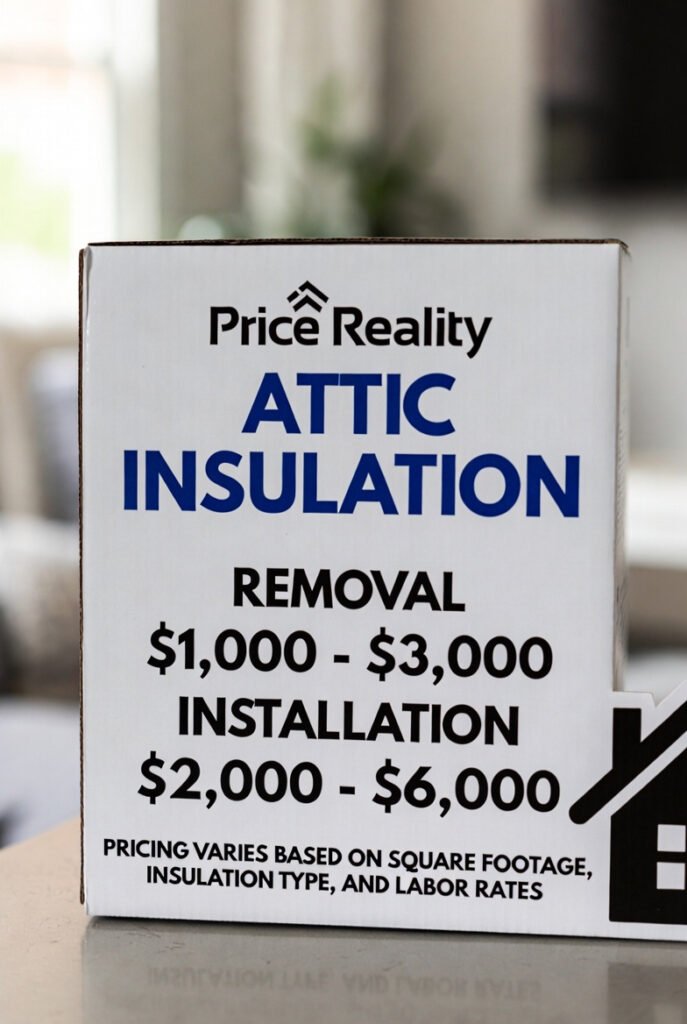
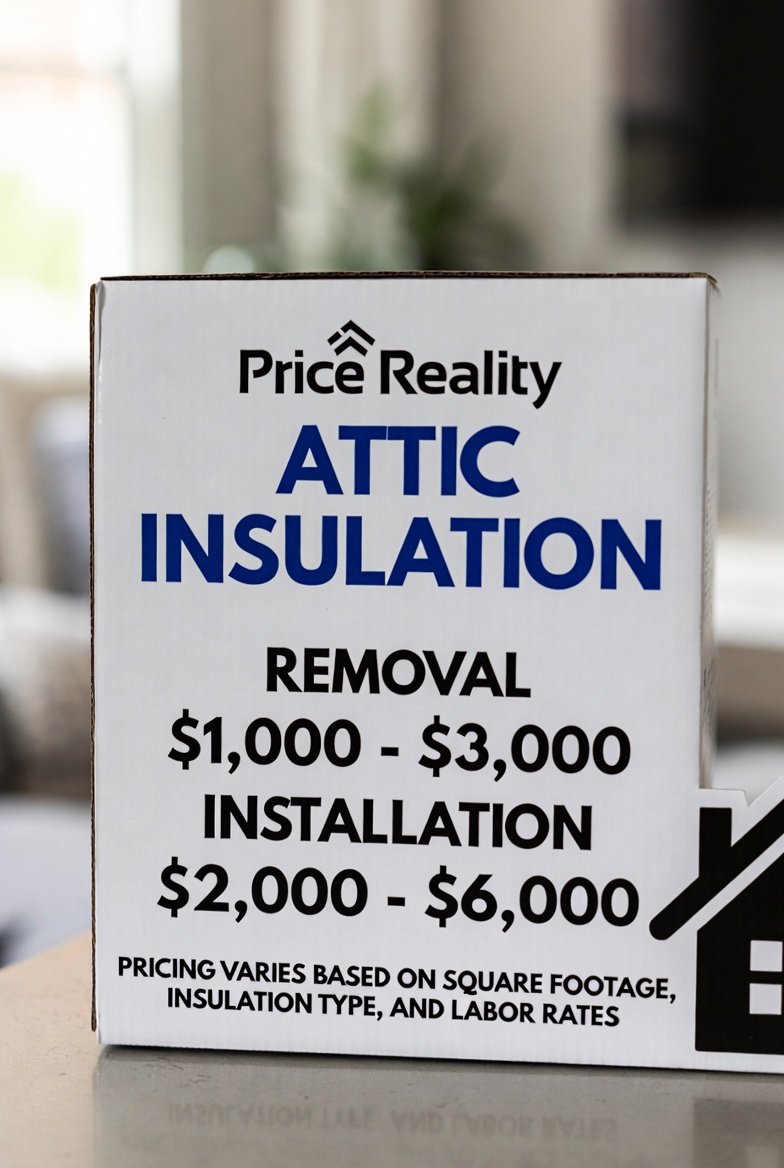
- A price reality box (low / typical / high) with scope boundaries
- Clear separation of top-off vs full replacement
- Included vs not included so quotes are comparable
- A quote scorecard + bid comparison framework
- Building-science alignment: seal leaks first, protect ventilation paths, verify coverage
ENERGY STAR positions sealing + insulating as a paired performance move
What’s Not Working
- One-number pricing with no scope
- Benefits fluff that ignores removal, access, sealing, and verification
- Contractor pages that hide exclusions until install day
Micro-perspective:
You don’t get overcharged because you chose the wrong company.
You get overcharged because the scope wasn’t written down.
Fast Price Reality: What Does It Cost to Replace Attic Insulation?
When homeowners say “replace attic insulation,” they usually mean:
Remove old insulation and install new insulation — often with air sealing and ventilation protection included.
Current Cost Anchors (Typical Ranges)
- Removal only: HomeAdvisor reports $600–$1,200 average (about $900), depending on size, type, condition, and access
- Install only (attic insulation): Angi reports many projects around $1,700–$2,500 total, or roughly $1–$3 per sq ft, depending on material and scope
Practical replacement reality:
Full replacement commonly lands in the few-thousand-dollar range once you combine removal + new install + sealing + ventilation + access + verification.
Operator truth:
If you want a number without scope, you’ll get surprised later.
Don’t buy a number. Buy scope.
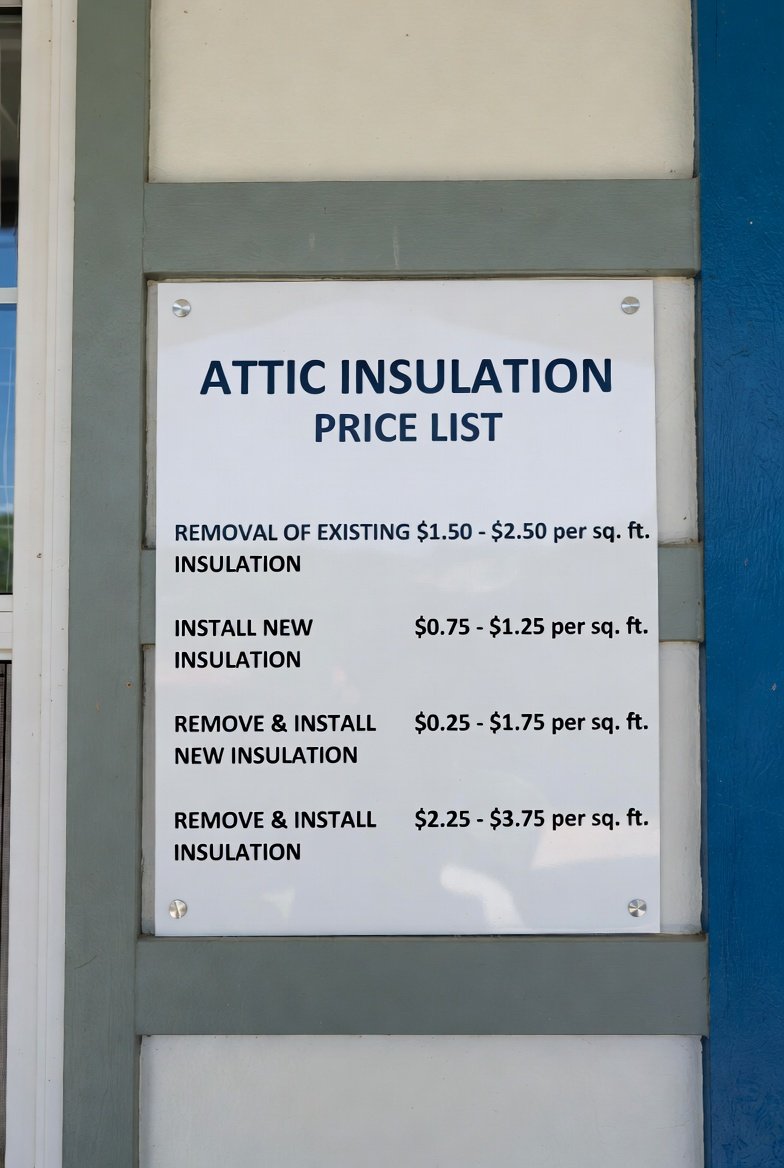
The “Replacement” Pricing Formula (Simple and Accurate)
Replacement Cost = Removal + New Install + Scope Add-Ons
- Removal (vacuum / bag / disposal)
- New insulation (material + labor)
- Add-ons such as:
- Air sealing
- Baffles / ventilation protection
- Hatch work / access improvements
- Contamination handling
- Verification (photos, depth markers, walkthrough)
Micro-perspective:
Your bill is basically labor difficulty + scope completeness.
What Drives the Price (10 Quote Levers)
- Attic size + access
Tight hatches, low clearance, steep pitches add labor. - Insulation type being removed
Angi’s 2025 data shows blown-in removal is often cheaper than batts/rolls. - Condition: clean vs contaminated
Pests, droppings, debris, odor, staining increase handling time. - Moisture history
EPA guidance highlights drying within 24–48 hours to prevent mold.
Operator meaning: replacement without fixing moisture in attic is wasted money. - Air sealing scope
ENERGY STAR positions sealing + insulation as the cost-effective combo. - Ventilation pathway protection
Baffles/clearances may be required to keep airflow open. - Target depth / R-value
More depth = more material + time. - Prep and protection
Stored items, recessed lights, safe walk paths. - Verification standards
Depth markers + photos + walkthrough take time—but prevent under-delivery. - Change-order rules
Clear rules reduce surprise charges.
Micro-perspective:
Cheap quotes aren’t cheap—they’re incomplete.
What a Legit Quote MUST Include
If it’s missing these, it’s not comparable.
Required Line Items
- Measured area (sq ft) + access assumptions
- Removal scope (full vs targeted) + disposal included
- New insulation type + target depth/R-value
- Air sealing scope (specific leak list + methods)
- Ventilation path plan (baffles/clearances if needed)
- Included vs excluded (hatch work, fan ducting, minor repairs)
- Verification (photos + depth markers + walkthrough)
- Timeline + crew size
- Change-order rules
- Warranty terms in plain language
Operator truth:
If it isn’t written, it isn’t included.
Hidden Costs People Don’t See Coming
Hidden Cost #1: Paying for replacement when top-off would work
Dry, clean, mostly even insulation may only need air seal + top-off.
Hidden Cost #2: Moisture makes the job bigger
EPA’s 24–48 hour window is the decision trigger.
Hidden Cost #3: Air sealing wasn’t included
ENERGY STAR doesn’t treat sealing as optional.
Hidden Cost #4: Ventilation gets blocked
Buried soffits = future rework.
Hidden Cost #5: Disposal & cleanup omitted
Some quotes quietly skip this.
Micro-perspective:
The cheapest bid often charges you later.
Proof Block: Why Sealing Changes the Value of Replacement
ENERGY STAR states sealing air leaks and adding insulation can deliver up to ~10% annual energy bill savings, depending on home and climate.
Operator meaning:
Replacing insulation without air sealing is like repainting a wall without fixing the leak behind it.
Operator Mistake → Consequence → Fix
Mistake
Homeowner chooses cheapest replacement quote. Old insulation removed, new blown in—no air sealing, no vent plan.
Consequence
Upstairs still drafty. Comfort improves slightly. Owner thinks “insulation doesn’t work.”
Fix
- Air seal bypasses
- Correct ventilation paths
- Re-level and verify insulation
Micro-perspective:
The first quote wasn’t cheaper. It was missing steps.
The Quote Scorecard (Compare 3 Bids Safely)
Score 0 / 1 / 2 per line.
Replace-Attic-Insulation Scorecard
- Area measured + access assumptions
- Removal scope + disposal included
- Condition notes (clean / contaminated / wet history)
- New insulation type + target R-value
- Air sealing scope listed
- Ventilation protection plan
- Verification plan
- Change-order rules
- Timeline + crew size
- Cleanup standards + warranty
Operator truth:
The best bid is usually the easiest to audit.
How to Get Accurate Pricing (Without Getting Played)
Ask for two options:
Option A: Air seal + top-off (if insulation is dry/clean)
Option B: Remove + air seal + replace + verify (if failed)
Copy / Paste Quote Request
“Please quote with these line items:
measured area + access assumptions,
removal/disposal,
insulation type + target depth/R-value,
air sealing scope (leak list),
ventilation/baffles plan if needed,
verification steps,
timeline/crew size,
change-order rules,
and what’s excluded.”
If they won’t itemize, that’s the decision.
Micro-perspective:
You’re not buying insulation. You’re buying a verified outcome.
Conclusion: One-Line Decision Matrix
Best overall: Removal + air sealing + install + verification
Best value: Two-option bid with clear exclusions
Highest risk: Cheapest “replacement” bid with vague scope — the pay-twice profile