
Attic Insulation Replacement: The Clean Decision Guide (Reinsulate vs Remove + Replace)
What This Page Covers / Doesn’t Cover
Covers:
When attic insulation replacement is actually needed, reinsulate (top-off) vs remove + replace, what “insulation removal and replacement” really includes, and a verification-first way to compare bids.
Doesn’t cover:
Medical advice, mold testing/diagnosis, or hazardous-material identification. If you suspect contamination or unsafe materials, treat it as a safety issue and use qualified help.
Deep Niche Reality: What’s Working (and What’s Not)
What’s Working in Winning Pages
- Decision-first structure: Top-off vs replacement rules early
- Scope clarity: Included vs not included so quotes are comparable
- Building-science alignment: Seal air leaks first, protect ventilation paths, verify coverage
ENERGY STAR explicitly calls out air sealing before insulation - Moisture-first logic: One clear timeline (EPA’s 24–48 hour rule)
- Assets: Pass/fail checklist, quote scorecard, decision matrix
What’s Not Working
- “Insulation expires in X years” with no inspection logic
- Fear-heavy mold talk without boundaries
- Replacement guides that ignore air sealing + verification
Micro-perspective:
Google rewards pages that help people decide and verify, not pages that just sound informative.
Do You Really Need Attic Insulation Replacement?
Most people search “attic insulation replacement” when they really mean:
- “My upstairs is uncomfortable.”
- “My energy bills are high.”
- “The attic smells weird.”
- “I want to do it right once.”
Operator truth:
Insulation rarely fails because it’s old.
It fails because conditions failed.
Those conditions fall into four buckets:
- Moisture: leaks, condensation, fans venting into attic
- Contamination: pests, droppings, debris, musty odor
- Disturbance: compression, bare spots, displaced coverage
- System gaps: air leaks, blocked ventilation, no verification
Micro-perspective:
Insulation doesn’t expire on a calendar. Attic conditions expire.
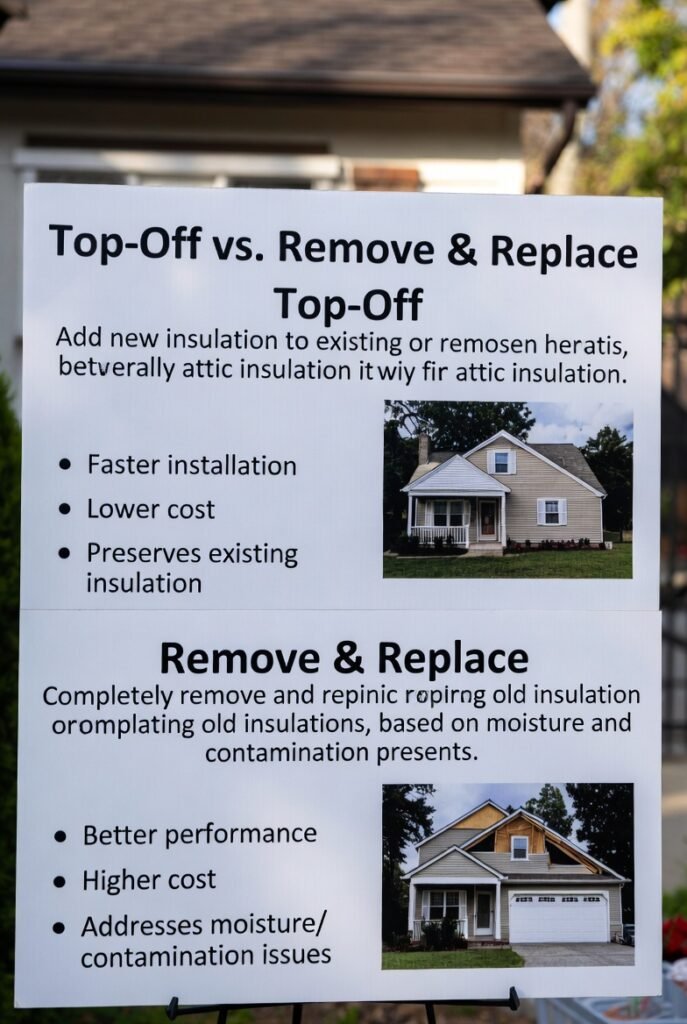
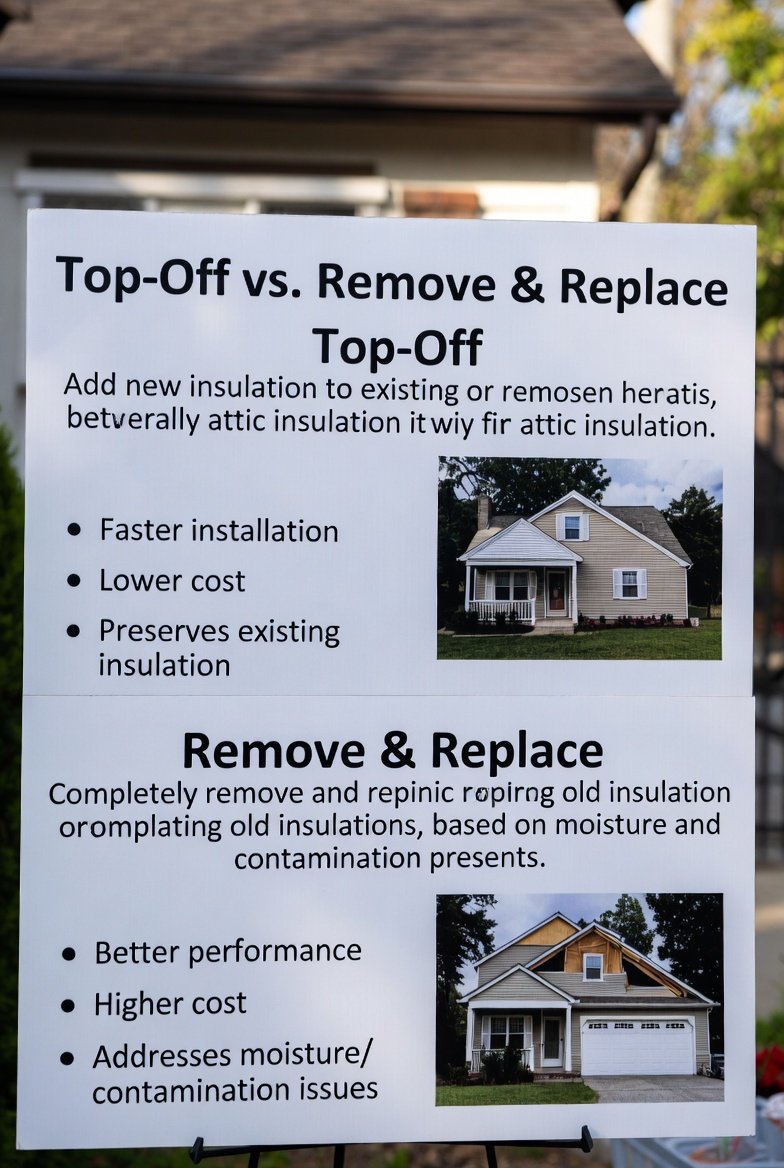
Reinsulate vs Remove + Replace (The Clean Decision Rule)
This single decision prevents most pay-twice outcomes.
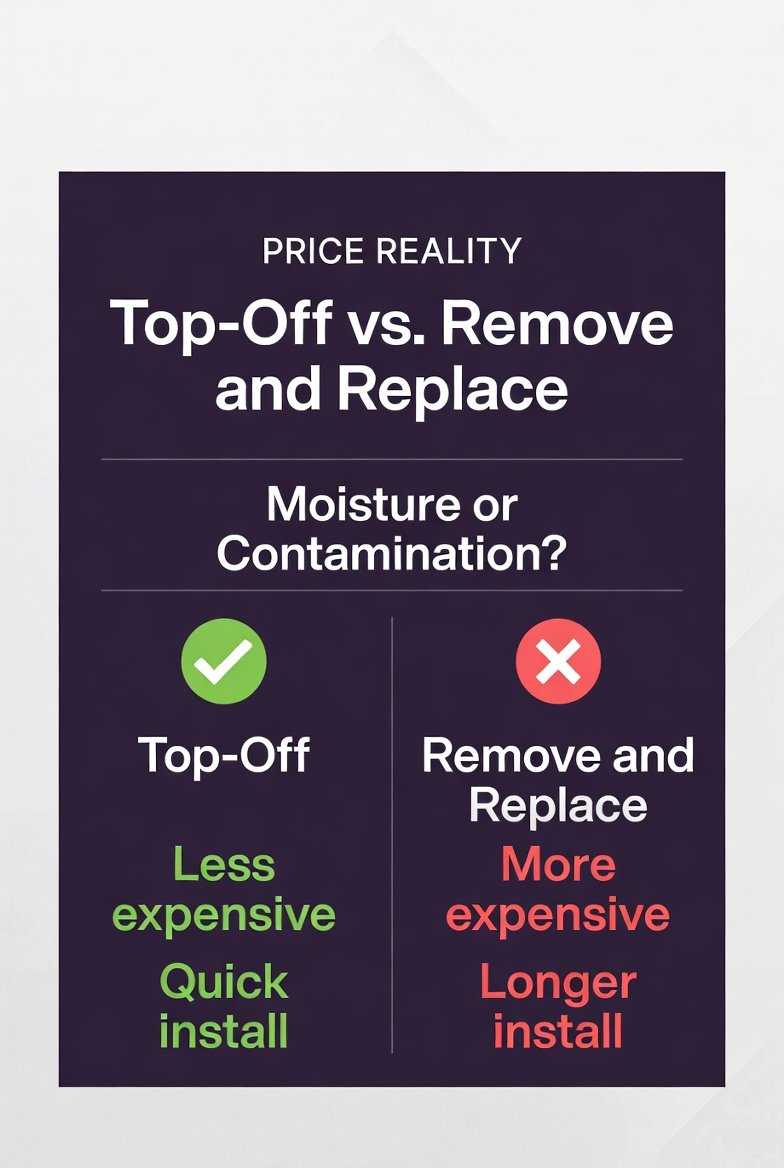
Reinsulate (Top-Off) Is Usually Enough When
- Existing insulation is dry, not musty, not visibly contaminated
- Coverage is mostly there with minor low spots
- You’ll air seal first (or include it in scope)
EPA / ENERGY STAR guidance points to sealing before adding insulation
Remove + Replace Is Usually the Safer Move When
- Insulation has been wet or stayed damp (especially beyond 24–48 hours)
- Pest contamination exists (droppings, nests, odor)
- It’s heavily compressed/matted or missing in large areas
- You need a clean attic floor to air seal and verify properly
Operator truth:
Top-off = performance boost
Replacement = reset
The 10 Replacement Triggers (Your Real “Lifespan Test”)
Hit 2 or more, and replacement becomes more likely than a top-off.
- Water damage (current or recurring)
EPA notes drying within 24–48 hours helps prevent mold growth. - Musty odor that keeps returning
Don’t bury a conditions problem. - Visible mold on insulation or framing
Moisture control comes first. - Pest nesting, droppings, tunneling, debris
Contamination + disturbance kills performance. - Heavy compression / matted paths
Trampled insulation no longer works evenly. - Major displacement (bare spots, deep valleys)
Performance fails where you need it most. - Fans or dryers exhausting into attic
Fix venting before insulating. - You can’t air seal without removal
ENERGY STAR points to sealing first—sometimes removal enables sealing. - Comfort symptoms + bypass clues
Drafts, room swings, hot/cold upstairs = air leakage signals. - You want a clean, verifiable baseline
Replacement can be chosen for certainty—if done right.
Micro-perspective:
If the attic is wet or contaminated, adding insulation is the fastest way to pay twice.
What “Insulation Removal and Replacement” Actually Includes
A legit scope is itemized and verifiable.
A Real Scope Usually Includes
- Measured attic area + access assumptions
- Removal scope: full vs targeted; bagging/disposal included
- Condition notes: wet history, pests, staining
- Air sealing scope (seal first per ENERGY STAR guidance)
- Ventilation path plan: baffles/clearances if needed
- New insulation type + target depth/R-value
- Verification: photos + depth markers + walkthrough
- Change-order rules
- Cleanup standards + warranty terms
Operator truth:
If it isn’t written, it isn’t included.
Proof Block: Why “Seal First” Is Non-Negotiable
ENERGY STAR’s attic insulation project page notes that EPA recommends air sealing the attic before adding attic insulation.
ENERGY STAR also states sealing air leaks and adding insulation can provide up to ~10% annual energy-bill savings (varies by home and climate).
Operator meaning:
Replacement without sealing bypasses often looks new—but performs like an old attic.
Operator Mistake → Consequence → Fix
Mistake
A homeowner hires a crew to “reinsulate.” New insulation is blown over old material with no sealing, no moisture check, no ventilation protection.
Consequence
Comfort improves slightly, but drafts remain. If old insulation was damp or contaminated, the problem is now hidden. The 24–48 hour moisture rule is ignored.
Fix
- Confirm attic is dry and moisture cause is solved
- Remove affected insulation where needed
- Air seal first (per ENERGY STAR guidance)
- Install to target depth
- Verify with markers/photos
Micro-perspective:
More insulation can’t compensate for uncontrolled air movement.
Pass / Fail Checklist (Print This)
PASS — Top-Off Likely Works
- Insulation is dry, no staining or musty odor
- No pest signs
- Coverage mostly even
- Air sealing included or planned
FAIL — Replacement Is Likely Safer
- Wet history not clearly resolved (esp. beyond 24–48 hours)
- Musty odor, visible mold, contamination
- Heavy compression or large bare areas
- Fans/ducts venting into attic
- You can’t air seal without removal
Operator truth:
If you fail, don’t shop “price per sq ft.” Shop scope + verification.
How to Compare 3 Bids Without Getting Played
Score each line 0 / 1 / 2.
Attic Replacement Bid Scorecard
- Area measured + access assumptions
- Removal scope + disposal included
- Condition notes included
- Air sealing scope listed (specific leak list)
- Ventilation pathway plan included
- Insulation type + target depth/R-value
- Verification plan (photos + markers + walkthrough)
- Timeline + crew size
- Change-order rules
- Cleanup standards + warranty
Micro-perspective:
The best bid is usually the easiest to audit.
Quick Verdict (1 Sentence)
If your attic is dry and clean, seal first and top-off; if it’s wet, contaminated, or heavily disturbed, remove + replace with verification so you only pay once.
Conclusion: Decision Matrix
Best overall:
Air seal first + remove where needed + reinsulate + verify (written scope, photos/markers).
Best value:
Two-option bid (top-off vs replace) with clear exclusions and verification.
Highest risk:
“Reinsulate” bid that skips sealing, ignores moisture history, and offers no verification — classic pay-twice profile.