
Attic Insulation Removal Cost: What You’ll Actually Pay (and What a Legit Quote Includes)
What This Page Covers / Doesn’t Cover
Covers:
Attic insulation removal cost ranges, what drives pricing, what “removal” should actually include (containment, disposal, cleanup), how to compare 3 “near me” bids safely, and when it makes sense to bundle removal with air sealing and re-insulation.
Doesn’t cover:
Health diagnosis, mold testing advice, or hazardous-material identification. If you suspect unsafe materials or heavy contamination, treat it as a safety job and use qualified professionals.
Deep SERP Reality: What’s Working vs What’s Not
What’s Working (and Why It Ranks)
- A fast price reality box separating low / typical / high with explanations
- Clear scope boundaries: removal-only vs removal + cleanup vs removal + re-insulation
- Included vs not included so quotes are comparable
- A quote scorecard + a simple 3-bid script
- A near-me bridge without spammy city pages (vetting questions + scope checklist)
What’s Not Working
- One-number pricing with no mention of disposal, containment, or cleanup
- Thin directory pages (wrong intent)
- “Near me” keyword stuffing without any verification framework
Micro-perspective:
The cheapest bid is usually the bid missing disposal, containment, or cleanup.
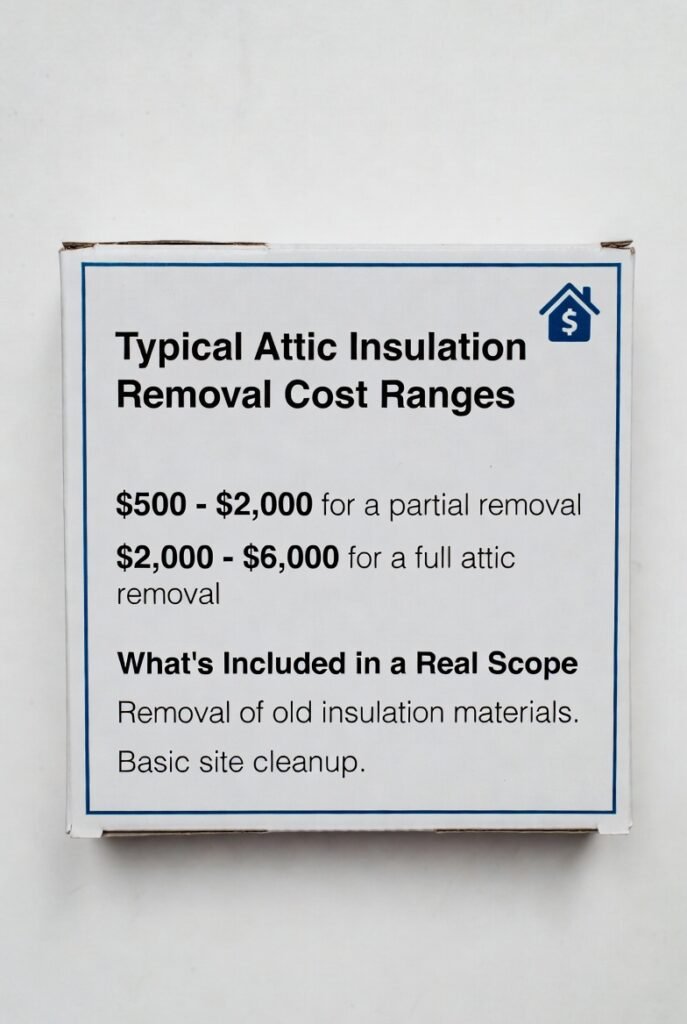
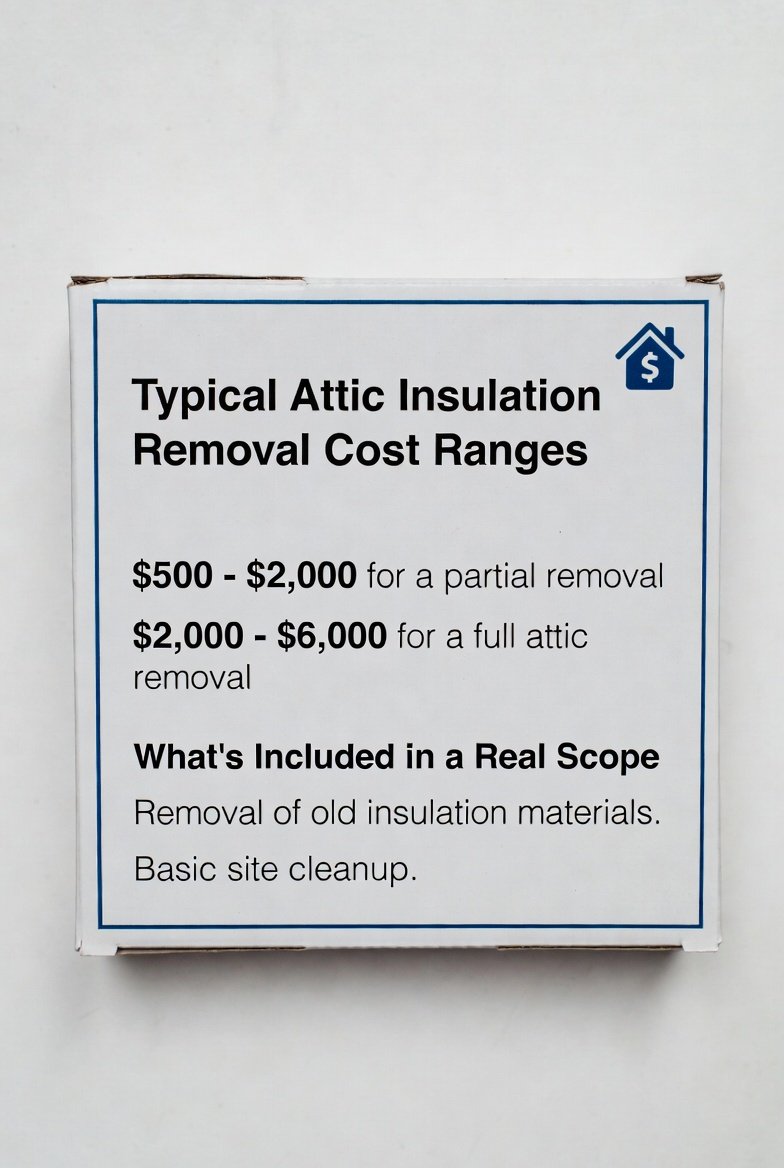
Fast Price Reality: How Much Does Attic Insulation Removal Cost?
Removal pricing is driven by labor time + access difficulty + condition risk + disposal.
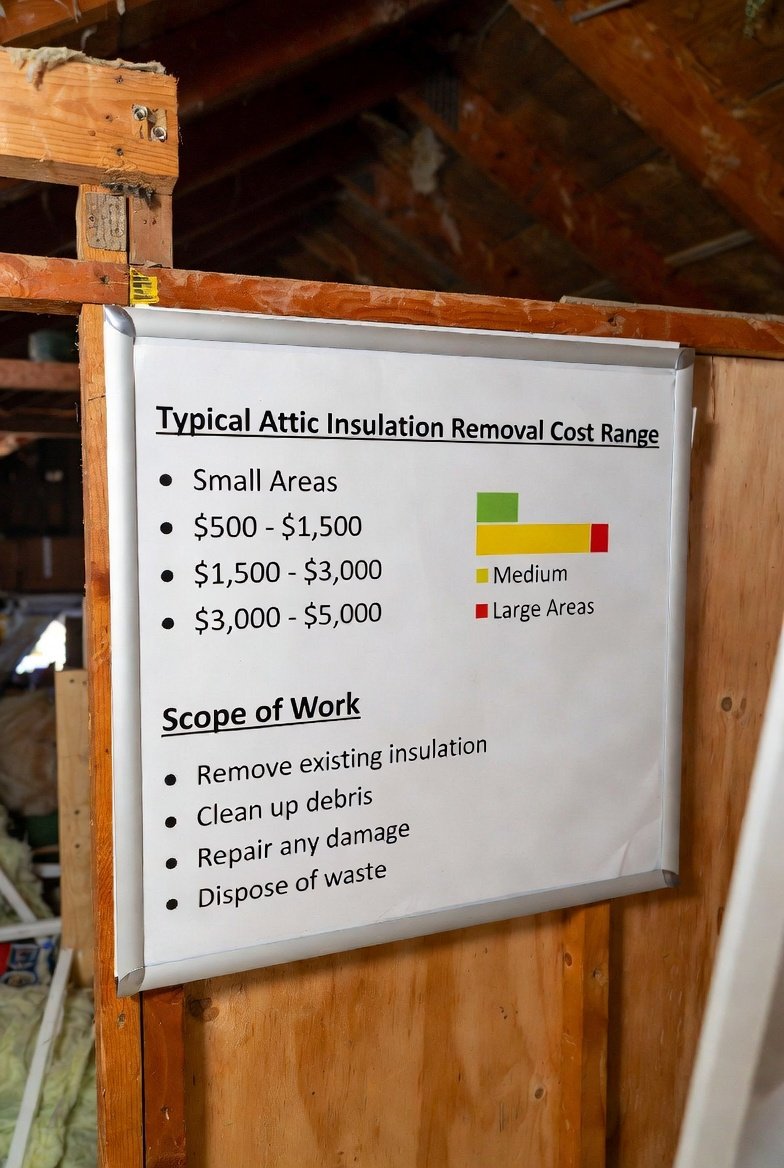
Typical Attic Insulation Removal Cost
- $600–$1,200 average range (about $900 average) per HomeAdvisor
- Costs vary by attic size, insulation type, condition, and accessibility
Angi notes pricing varies significantly by insulation type (blown-in vs batts/rolls), access difficulty, and contamination, often expressed as $/sq-ft bands or project totals.
Price Reality Box (Operator View)
Low:
Clean insulation, easy access, straightforward vacuum/pull, simple haul-off
Typical:
Average access, moderate debris, standard containment + disposal
High:
Tight or low attic, heavy contamination (pests or wet insulation), stronger containment, more cleanup, more disposal time
Operator truth:
You’re paying for time, access, containment, and disposal — not the “value” of old insulation.
What You’re Actually Buying (Removal Scope, Not a Number)
Many homeowners buy “removal” assuming it includes everything. It doesn’t—unless it’s written.
A real attic insulation removal job has four parts:
- Remove — vacuum or manual pull
- Contain — dust/debris control so your home isn’t coated
- Dispose — haul-away + fees included
- Clean + verify — what “clean” means + photo proof
Micro-perspective:
Removal without disposal and cleanup is just moving the mess from your attic into your life.
The 10 Cost Drivers That Change a Quote
- Insulation type (blown-in vs baffles/rolls)
Angi shows removal pricing varies by type. - Attic access + clearance
Small hatches, low headroom, steep pitches add labor fast. - Condition: clean vs contaminated
Droppings, nests, odor, heavy debris slow work and raise containment needs. - Moisture history
EPA notes mold usually won’t grow if items dry within 24–48 hours.
If insulation stayed wet beyond that, removal becomes a restore-conditions job. - Amount of insulation (depth + density)
More volume = more bags + more disposal time+R-value. - Obstructions
Ducts, wiring, platforms, stored items slow removal. - Containment level
Minimal vs full dust barriers change pricing. - Disposal & hauling
Dump fees, distance, and time vary—and some quotes omit it. - Verification expectations
Photos, cleanup checklist, and “what counts as done” prevent disputes. - Add-on work you may actually need
Many removals are done to allow air sealing or re-insulation.
Micro-perspective:
If two quotes differ massively, one of them is missing steps.
What a Legit Attic Insulation Removal Quote Includes
If it’s not itemized, it’s not comparable.
Must-Have Inclusions
- Measured attic area (sq ft) + access assumptions
- Insulation type being removed (or onsite confirmation plan)
- Removal method (vacuum vs manual)
- Containment plan (dust/debris control)
- Disposal / haul-off included in writing
- Cleanup standard (what’s cleaned and to what level)
- Timeline + crew size
- Change-order rules (wet or contaminated areas)
- Before/after photo verification
Operator truth:
If it isn’t written, it isn’t included.
Hidden Fees & Surprise Scope Traps
Trap #1: Disposal Is “Extra”
Looks cheap—until the end of the job.
Trap #2: “We Don’t Do Containment”
Then you pay for cleanup—or live with the dust.
Trap #3: Moisture Timeline Ignored
EPA’s 24–48 hour rule is the decision trigger.
Trap #4: Removal Needed for Air Sealing—but Not Priced
You coordinate a second crew and pay more overall.
Trap #5: Confusing Removal With Replacement
Some quotes are removal-only; others -only. You need line items.
Micro-perspective:
Cheap bids don’t save money. Complete scopes do.
Proof Block: The Moisture Timeline That Changes the Job
EPA states mold generally won’t grow if wet/damp items are dried within 24–48 hours.
Operator meaning:
If insulation stayed wet beyond that—or keeps getting wet—removal is often part of restoring dry, stable conditions.
Operator Mistake → Consequence → Fix
Mistake
Homeowner searches “insulation removal near me” and books the cheapest bid.
Consequence
On job day:
- disposal is extra
- containment is minimal
- cleanup isn’t defined
- final attic isn’t verifiable
Fix
Before booking, require written scope including:
- disposal
- containment
- cleanup standard
- photo verification
- change-order rules
Micro-perspective:
The best removal company is the one that makes scope easy to audit.
Near-Me Intent Without Spam: How to Pick a Removal Company
You don’t need 50 city pages. You need a call script.
Ask These 8 Questions
- Is disposal/haul-off included in writing?
- What’s your dust containment plan?
- Do you price blown-in vs batts differently?
- What’s your cleanup standard?
- Do you provide before/after photos?
- How do you handle wet or contaminated areas?
- Can you quote removal + air sealing + re-insulation separately?
- What’s the timeline and crew size?
If they can’t answer clearly, move on.
Quick verdict:
Choose the company that provides an itemized scope with disposal, containment, cleanup standards, and photo verification — not the cheapest number.
Quote Scorecard (Compare 3 Bids Safely)
Score each item 0 / 1 / 2.
Removal Quote Scorecard
- Area measured + access assumptions
- Insulation type confirmed (or confirm plan)
- Removal method specified
- Containment plan stated
- Disposal/haul-off included
- Cleanup standard defined
- Photo verification included
- Timeline + crew size stated
- Change-order rules stated
- Optional add-on line items offered
Micro-perspective:
The best bid is the easiest to audit.
Conclusion: Decision Matrix
Best overall:
Itemized bid with disposal + containment + cleanup + photo verification and clear price triggers.
Best value:
Bid that offers removal + air sealing + re-insulation as separate line items so you choose scope.
Highest risk:
Cheapest “near me” bid that won’t define disposal, containment, or cleanup — classic surprise-fee profile.