
Air Sealing Services
Quick Verdict
The best air sealing service is the one that defines scope in writing and proves results with verification — not the one that sells the biggest promise.
What This Page Covers (and Doesn’t)
Covers:
What air sealing services are, what’s included vs excluded, scope tiers (targeted vs whole-home), when blower door testing matters, a scope-based price anchor, hazards to flag, red flags, and a 3-bid comparison system.
Doesn’t cover:
City-by-city pricing, DIY hazardous-material handling, or guaranteed outcomes without diagnostics (results vary by home, leakage paths, insulation, and ventilation).
Proof Widget — Scope + Proof Wins
(Skin: Receipt-Mode | Structure B)
Claim
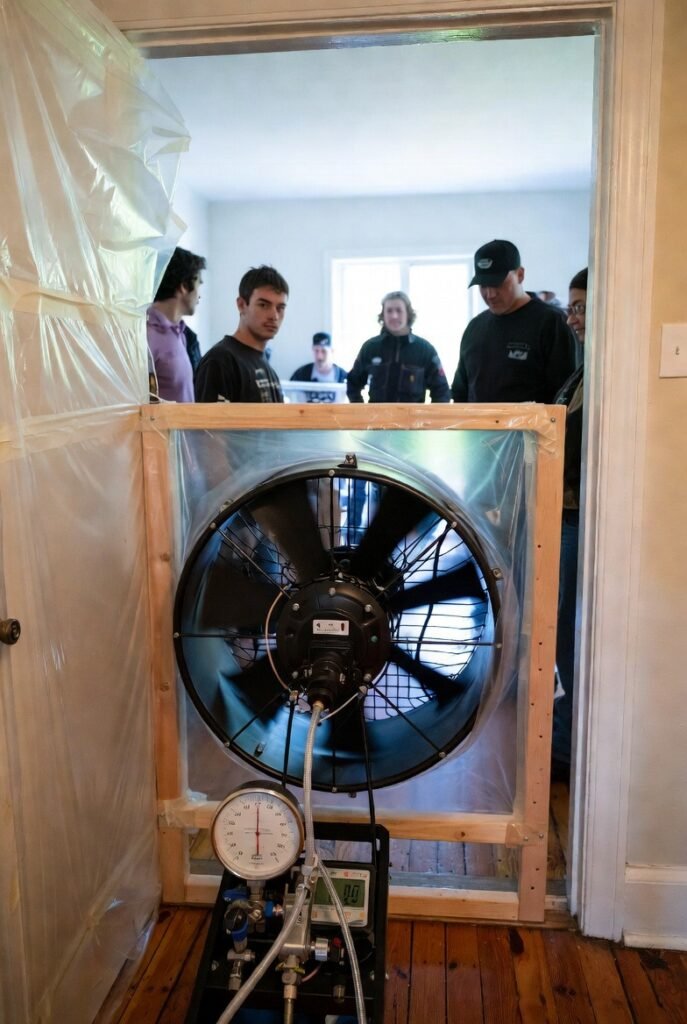
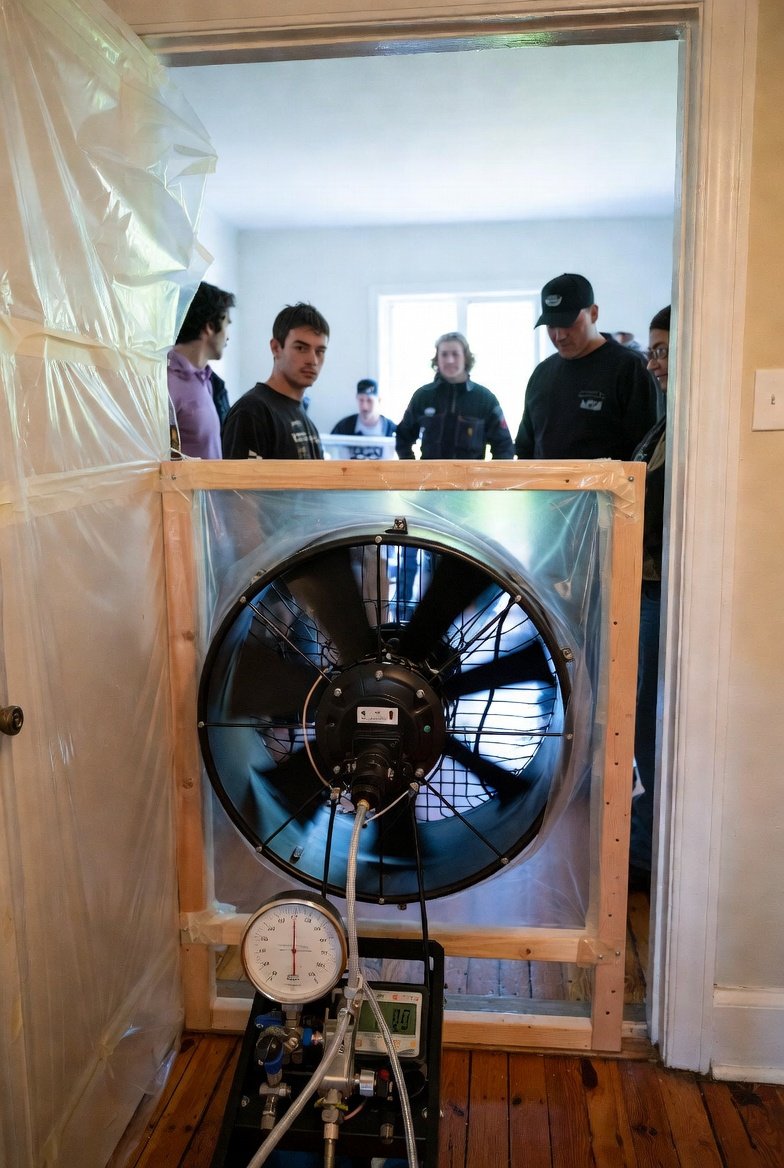
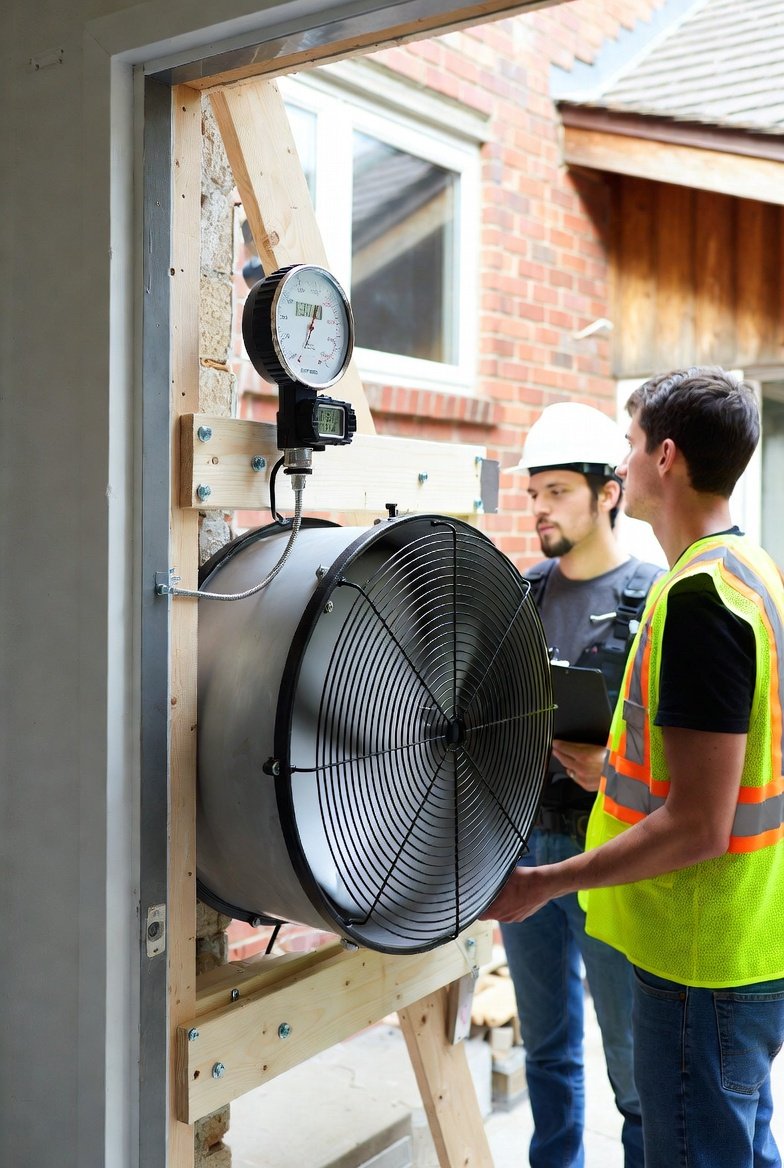
Home energy professionals use a blower door as a diagnostic tool to determine how much air is entering or escaping and to identify air-leakage areas for improvements.
Proof you require → Why it matters
- Written target list + photo verification → prevents paying for vague “we sealed some leaks”
Spec — Ventilation Standard
Building America Solution Center specifies a minimum 1-inch clear airflow path from soffit vents, extending at least 6 inches above attic insulation height (wind baffles/blocking at eaves).
Verify
Ask for a job packet: scope sheet + before/after photos + (if used) blower door notes.
Operator truth:
Don’t buy a number. Buy scope.
1) What Air Sealing Services Actually Are
Air sealing services reduce uncontrolled air leakage through the building envelope — cracks, gaps, and bypasses that let conditioned air escape and outside air enter.
It’s often bundled with insulation, but it’s a different job with different proof.
Problems it targets
- drafts and cold floors
- hot/cold rooms
- high bills with mediocre comfort
- dust and odor pathways
- “we added insulation and it still feels the same”
Operator truth:
Most comfort problems trace back to air movement, not R-value alone.
2) The Two Service Tiers You’ll See in Real Quotes
A) Targeted Air Sealing (Zone-Based)
Focuses on the biggest leakage areas — commonly attic bypasses, rim joists, penetrations, attic access points.
Best for:
Clear draft issues and a known problem zone.
B) Whole-Home Air Sealing (Diagnostic + Comprehensive)
Broader scope, typically includes diagnostics (often blower door) and post-work verification.
DOE explains blower door testing is used to determine airtightness and identify leakage areas.
Best for:
Older homes with widespread leakage or when you want measurable before/after evidence.
Operator truth:
“Whole-home” without verification is just a bigger promise.
3) Price Anchor (Scope-Based, Region-Dependent)
Air sealing is priced by scope, access, home size, and leakiness.
Ranges can start in the hundreds for limited targeted work and move into the low-thousands for comprehensive diagnostic packages.
How to read the number:
Treat it as a scope indicator, not a market price. Big gaps usually mean missing scope or missing verification.
Operator truth:
Cheap bids often win by deleting work you actually needed.
4) What’s Included vs Not Included (The Line Items That Matter)
Included (insist on these in writing)
- Written target list (specific leak locations)
- Materials/method notes (foam, caulk, gaskets, rigid blocking where appropriate)
- Ventilation-safe rule (no blocked airflow; baffles where needed)
- Verification (photos + checklist sign-off; blower door notes if included)
Usually excluded (fine if stated clearly)
- roof leaks / structural repairs
- electrical repairs
- mold remediation
- HVAC redesign
- hazardous insulation removal (separate qualified scope)
Operator truth:
Included vs excluded is where honest contractors protect you.
5) Do You Need a Blower Door Test?
DOE guidance is clear: blower doors quantify air leakage and help identify leakage locations.
Worth it when
- you want measurable before/after results
- comfort problems are widespread
- insulation didn’t fix drafts
- multiple leakage pathways are suspected
Optional when
- scope is tightly targeted and verified with photos + checklist
Operator truth:
If they can’t explain how the test changes the plan, it’s marketing — not diagnostics.
6) Mid-Article Proof Block — What “Professional” Looks Like
A credible workflow:
- Hazard scan (moisture, questionable insulation, combustion safety)
- Written target list
- Seal major bypasses (controlled order)
- Verification (photos + checklist; testing notes if included)
DOE/ENERGY STAR guidance emphasizes identifying key leakage areas and sealing them safely.
Operator truth:
Air sealing is hidden work. Hidden work needs receipts.
7) Operator Mistake → Consequence → Fix
Mistake
Lowest bid. No targets. No verification. Crew foams visible gaps and leaves.
Consequence
Comfort barely improves. No proof. Later insulation buries real leaks.
Fix
Re-scope: require written targets, photos, checklist sign-off.
If whole-home, require blower door notes that explain what changed.
Operator truth:
“We sealed it” is not documentation.
8) Pass / Fail Checklist — Did You Buy the Right Service?
PASS
- Written target list
- Included / excluded section
- Before/after photos
- Ventilation paths respected (baffles where needed)
- Diagnostics explained in plain language (if included)
FAIL
- No target list
- No proof
- “Whole-home” with no testing
- Hazard denial (vermiculite, moisture, combustion)
Operator truth:
If the contractor won’t define the work, you’re paying for uncertainty.
9) Hazard Rule — Vermiculite / Asbestos Risk
EPA guidance: vermiculite insulation should be left undisturbed unless handled by qualified professionals.
This matters because air sealing may require moving insulation to reach bypasses. A legitimate contractor flags this and re-scopes safely.
Operator truth:
Efficiency upgrades are never worth a health gamble.
10) The 3-Bid Air Sealing Scorecard
Give every contractor the same requirements.
Scope (written)
- Targets listed (attic bypasses, rim joist, penetrations, access points)
- Included vs excluded
- Ventilation-safe statement
Proof (delivered)
- Before/after photos
- Checklist sign-off
- If blower door included: pre/post notes + how results changed scope
Red Flags
- “We seal everything” with no list
- No proof package
- Hazard denial
Operator truth:
You’re not buying foam. You’re buying controlled scope + proof.
Conclusion: Decision Matrix
Best overall:
Written scope + verification packet; diagnostics only when they change the plan.
Best value:
Most specific, most measurable bid — not the cheapest.
Highest risk:
Any quote without targets or proof, or one that ignores EPA vermiculite guidance.