
Attic Air Sealing
Quick Verdict
Air sealing is the comfort fix; insulation is the blanket.
Do the sealing first or you’ll pay for coverage that air leaks can bypass.
What This Page Covers (and Doesn’t)
Covers:
What attic air sealing actually means, where the big leaks really are, what good scope looks like, ventilation-safe rules, hazards you should not disturb, verification steps, and how to compare contractor bids.
Doesn’t cover:
One-number pricing, city-by-city pricing, or DIY removal steps for potentially hazardous insulation.
Proof Widget — Seal First, Verify Always
Claim 1
Air sealing major attic leaks should be a precursor to installing insulation so leaks are sealed before they become inaccessible.
Claim 2
Sealing attic air leaks improves insulation R-value performance and comfort (ENERGY STAR guidance).
Verify
Require before/after photos of top-plate seams and large penetrations before insulation is returned.
Spec — Ventilation Clearance
DOE’s Building America Solution Center calls for a minimum 1-inch clear airflow path from soffit vents, extending at least 6 inches above insulation height (use baffles/wind blocking).
Operator truth:
If it can’t be verified, it didn’t happen.
1) What Attic Air Sealing Actually Means
Attic air sealing means sealing the leak pathways between your living space and the attic (the attic floor plane). It does not mean making the attic airtight.
In most homes, the attic is outside the conditioned envelope. The goal is to stop the house from bleeding air into it.
Why it matters:
Insulation slows heat transfer.
Air leakage moves heat and moisture fast.
Operator truth:
Insulation fights temperature.
Air sealing fights movement.
Movement usually wins.
2) The SERP Reality: What Winning Pages Do
Top pages win by doing three things clearly:
- Scope clarity: what gets sealed, what doesn’t, and why
- Verification: photos, checkpoints, pass/fail
- Ventilation safety: sealing leaks without choking airflow
Most losing pages are vague DIY fluff or “benefits” content with no scope.
Operator truth:
Homeowners don’t buy “air sealing.”
They buy relief — and they need proof.
3) The Leak Map That Actually Moves the Needle
If a contractor can’t list these, they’re guessing.
A) Top Plate Seams (Perimeter)
The long continuous leak line where interior walls meet the attic floor plane.
Common, boring, and skipped.
Operator truth:
Perimeter sealing is tedious — that’s why it matters.
B) Plumbing Stacks & Pipe Penetrations
Large holes often buried under insulation.
Scope must say how insulation is moved and replaced.
C) Electrical Penetrations & Ceiling Boxes
Wiring holes, junctions, fixture pathways.
D) Chases, Soffits, Open Framing Cavities
Dropped ceilings, duct chases, open wall bays.
Classic high-leak bypasses.
E) Attic Hatch / Pull-Down Stairs
Often the biggest obvious leak.
Correct scope = weatherstripping + insulated cover, not “pile insulation.”
F) Flues / Chimneys (High-Heat Zone)
ENERGY STAR guidance:
Seal gaps with high-temperature caulk — do not use spray foam.
Operator truth:
Efficiency never overrides safety.
4) Seal-First Sequence (Non-Negotiable)
A correct job follows this order:
- Safety & hazard check
- Preserve ventilation paths (baffles/wind blocking)
- Seal major leaks (plates, penetrations, chases, hatch)
- Then insulate and verify depth
Operator truth:
Starting with insulation = finishing fast, not finishing right.
5) Ventilation-Safe Rules
If the attic is vented, airflow must stay intact.
Minimum standard worth demanding:
Baffles at eaves + clear airflow path.
Building America calls for a 1-inch clear channel, extending 6 inches above insulation height.
Good scope language includes:
- “Install baffles at all vented soffits.”
- “Maintain clear ventilation channel.”
- “Insulation kept out of airflow path.”
Operator truth:
A tighter home still needs the attic to behave like an attic.
6) Hazard Rule — High-Risk Insulation
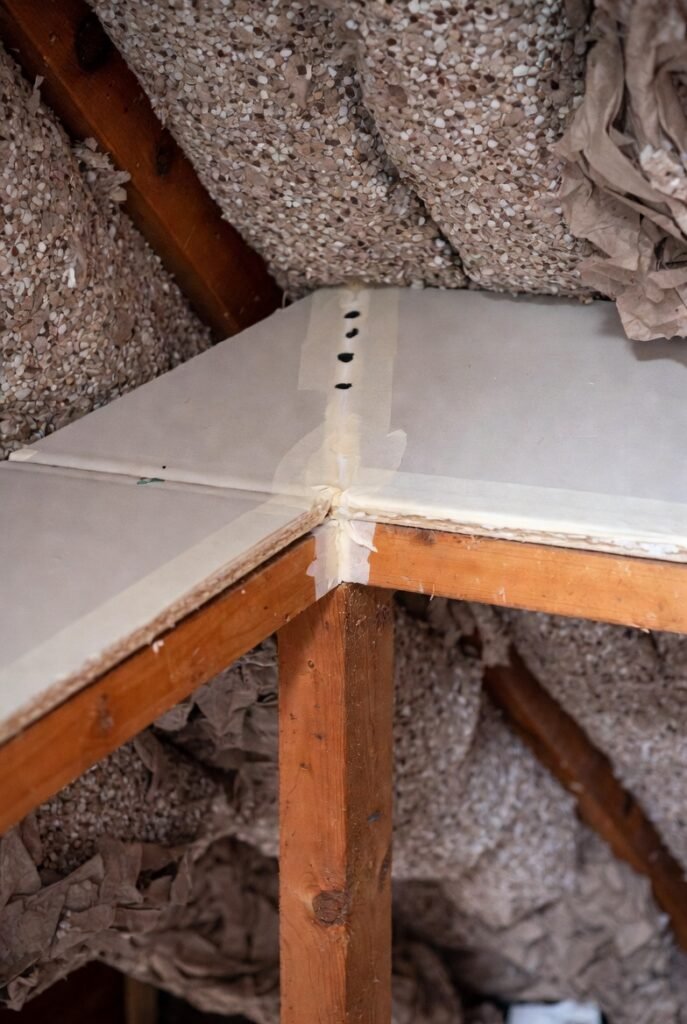
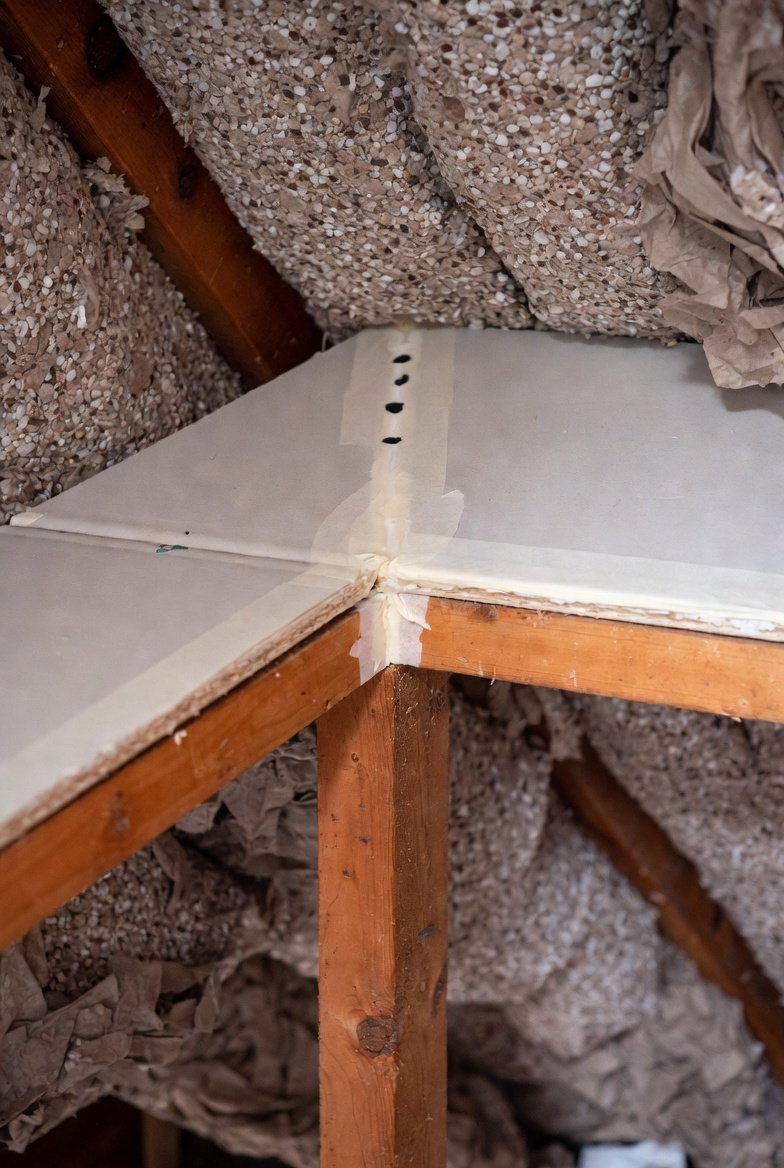
If you see vermiculite (pebble-like loose fill):
- Treat as potentially asbestos-contaminated
- EPA recommends leaving it undisturbed
- No DIY removal steps
Operator truth:
The best upgrade is the one that doesn’t create a health problem.
7) Verification Standard (Mid-Article Proof Block)
A checklist + sign-off is not extra. It’s the job.
Your project file should include:
- Written scope
- Before/after photos (top plates, penetrations, chases)
- Ventilation confirmation (baffles present)
- Hatch detail confirmation
Operator truth:
Verification prevents the “we did it” argument.
8) Operator Mistake → Consequence → Fix
Mistake
The low bid says “air sealing included.” No targets. No photos.
Consequence
Minimal comfort change. Leaks buried by insulation later.
Fix
Re-scope with a target list, ventilation rules, and mandatory photos.
9) Pass / Fail Checklist — Did It Actually Happen?
PASS
- Written scope lists plates, penetrations, chases, hatch
- Before/after photos provided
- Baffles installed; soffits clear
- Heat-safe flue detailing
FAIL
- “We sealed what we saw”
- No photos, no checklist
- Buried soffit vents
- Casual handling of vermiculite
Operator truth:
Hidden work must be documented.
10) Contractor Quote Script (Use This)
Ask them to write:
- Targets included (yes/no)
- Ventilation protection plan
- Flue heat-safe detailing
- Verification steps
- Exclusions listed
Operator truth:
The best contractor makes the job measurable in writing.
Conclusion: Decision Matrix
Best overall:
Clear written scope + baffles + photo verification.
Best value:
Not the cheapest — the most verifiable.
Highest risk:
Any bid that avoids targets, verification, or ventilation rules.