
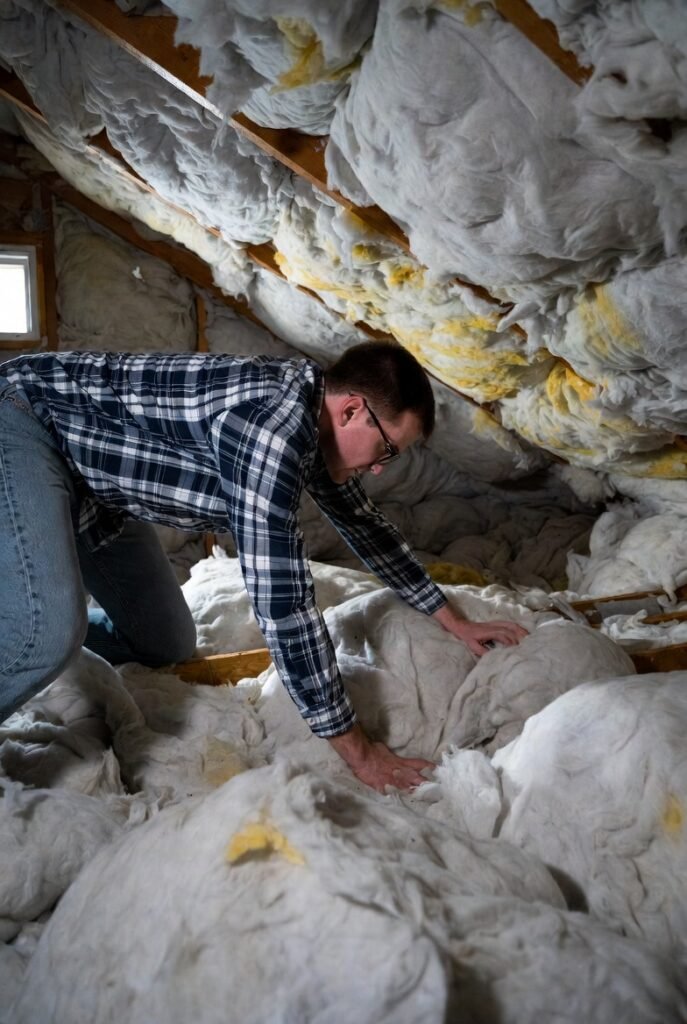
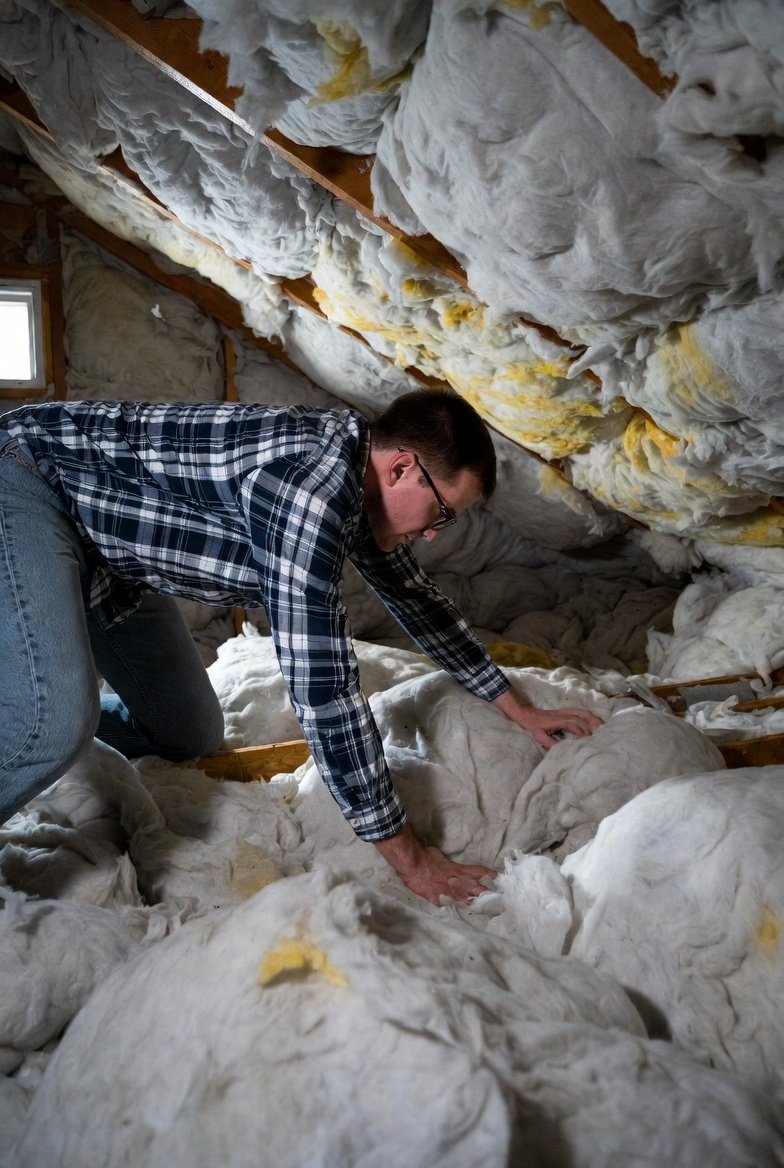
Attic Insulation Lifespan: When to Replace It (and When You Can Leave It Alone)
What This Page Covers / Doesn’t Cover
Covers:
How long attic insulation can last, what actually makes it “fail,” how to decide top-off vs replacement, what to verify, and how to talk to contractors without getting sold a “number.”
Doesn’t cover:
City-by-city lifespan claims, diagnosing mold, or health advice. If you suspect contamination or unsafe materials, treat it seriously and use qualified help.
Deep SERP Sanity Check (What’s Working + What Fails)
What’s Working (and Why It Ranks)
- Decision-first framing: Replace vs top-off rules early, with a clear checklist
- Moisture-first logic: Practical timelines instead of vague warnings
EPA guidance emphasizes acting within 24–48 hours after water damage - Building-science alignment: Seal air leaks first, then insulate; keep ventilation paths open
ENERGY STAR’s attic guidance explicitly points to sealing first - No fake precision: Strong pages explain conditions that shorten lifespan, not calendar years
What’s Not Working (and Why It Loses)
- “Insulation removal lasts 20–30 years” with no inspection logic
- Fear-driven mold talk with no scope or process
- Pages that ignore moisture, compression, and disturbance—the real failure modes
Micro-perspective:
Google rewards pages that help people decide, not pages that just sound informational.
So… How Long Does Attic Insulation Last?
Here’s the operator answer:
Attic insulation can last decades if it stays dry, clean, and undisturbed—and if air leakage and ventilation conditions aren’t sabotaging it.
Some materials hold performance better than people assume. The Insulation Institute (NAIMA) describes research indicating fiberglass and mineral wool do not experience a reduction in thermal performance over time and that settling itself isn’t inherently the issue.
Operator truth:
Insulation doesn’t expire on a calendar. Conditions expire.
Micro-perspective:
A 25-year-old attic can outperform a 5-year-old attic if it’s dry, sealed, and verified.
The Only Decision That Matters: Top-Off vs Replace
Most homeowners get this wrong because contractors often quote what’s easiest—not what’s correct.
Top-Off Is Usually Enough When
- Insulation is dry, not musty, not visibly contaminated
- Coverage is a bit low or uneven, but not destroyed
- There’s no ongoing roof leak or recurring condensation issue
- You’re willing to do air sealing first (or as part of the scope)
ENERGY STAR points to sealing before adding attic insulation
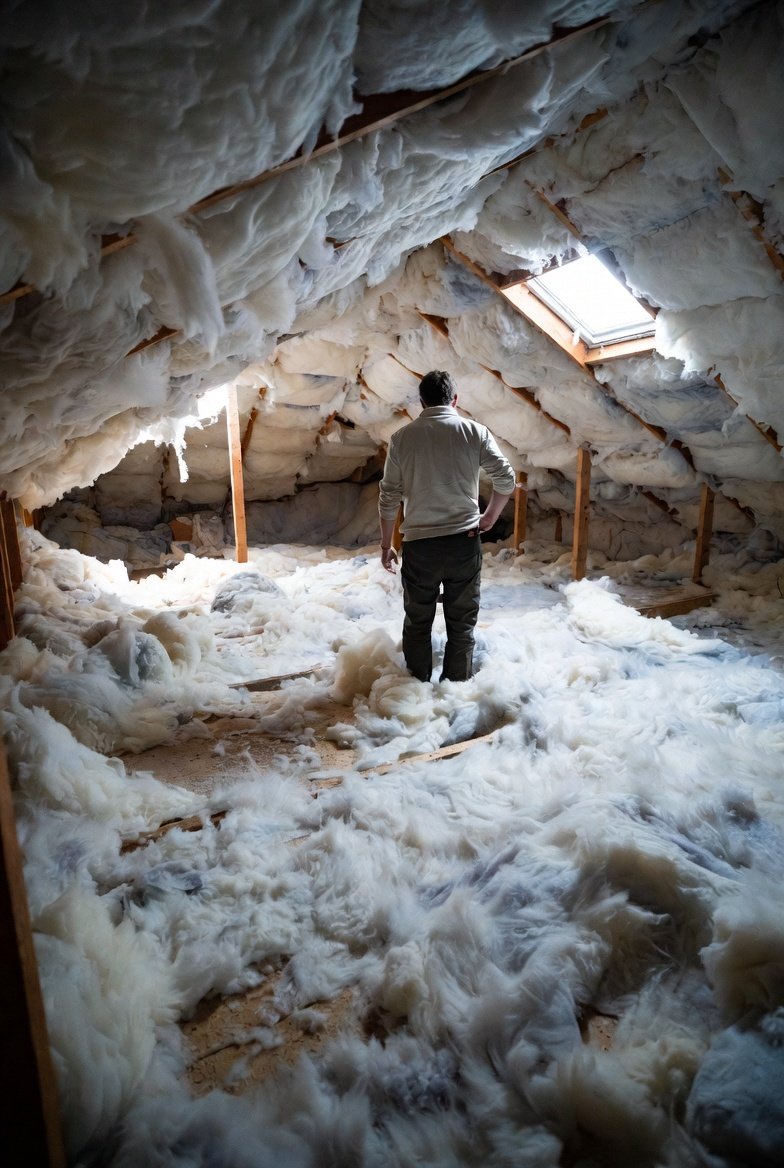
Replacement Is Usually the Smarter Move When
- Insulation is water-damaged or stayed damp
- You have pest contamination (droppings, nests, strong odor)
- It’s heavily compressed or missing in large areas
- You need a clean attic floor to air seal correctly and verify coverage
Micro-perspective:
Top-off is a performance boost.
Replacement is a reset.
The 9 Replace-Now Triggers (The Real Lifespan Test)
Use these like a pass/fail exam. If you hit two or more, replacement becomes much more likely.
- Water damage (active or recurring)
If the insulation got wet and didn’t dry fast, treat it as suspect.
EPA’s guidance is built around acting within 24–48 hours to prevent mold. - Musty odor that keeps coming back
Odor usually means moisture history or contamination—don’t cover it. - Visible mold on insulation or framing
This becomes a moisture-control project first. - Pest nesting, droppings, tunneling, or heavy debris
Contamination and disturbance reduce real-world performance. - Compression / matting
Trampled or stored-on insulation no longer acts like an even thermal layer. - Major displacement (bare ceiling spots or deep valleys)
Performance fails where you need it most. - Fans or dryers exhausting into the attic
This is a condition failure—fix venting and assess damage. - You can’t air seal correctly with insulation in place
If bypasses are buried, removal may be required. - Comfort symptoms + evidence of bypasses
Hot upstairs, cold winters, drafts—often air leakage, not just “thin insulation.”
ENERGY STAR supports sealing air leaks before insulating.
Micro-perspective:
Adding insulation over wet or contaminated material is like putting a clean sheet on a dirty bed.
What the Best “Replacement” Scopes Actually Look Like
A proper replace/remove job follows a sequence:
- Fix the conditions
Roof leaks, condensation drivers, fan venting, duct leaks - Remove and clean (only as needed)
Targeted or full removal based on spread - Air seal the attic floor
ENERGY STAR’s attic guidance points to sealing as part of doing insulation correctly - Protect ventilation pathways
Baffles / clearances where applicable - Install new insulation evenly
Target depth, no thin spots - Verify
Photos, depth markers, walkthrough
Micro-perspective:
A replacement job without verification is just an expensive guess.
Proof Block: Moisture Timing Is the Real “Expiration Date”
EPA’s mold remediation guidance is built around responding to water damage within 24–48 hours to prevent mold growth.
Operator meaning:
If insulation stays wet beyond that window, risk isn’t just lower R-value—it’s hidden moisture retention and contamination potential.
Operator Mistake → Consequence → Fix
Mistake
A homeowner sees an old roof stain, assumes it’s handled, and pays for a quick top-off.
Consequence
The damp climate zone remains. Comfort improves slightly, but conditions keep cycling.
EPA guidance emphasizes acting quickly to avoid mold after water damage.
Fix
- Confirm leak is truly solved
- Remove affected insulation
- Dry thoroughly
- Air seal
- Re-insulate and verify
Micro-perspective:
The cheapest time to fix moisture is the first time you notice it.
Pass / Fail Checklist (Use This Before You Call Anyone)
PASS If
- Insulation looks dry, no staining or odor
- Coverage mostly even
- No pest signs
- You can commit to air sealing
FAIL If
- Any wetness now or unresolved leak history
- Musty odor, visible mold, contamination
- Large bare spots or heavy compression
- Fans dumping moist air into attic
Operator truth:
If you fail, replacement isn’t extra—it’s the correct project.
DIY Check: 7 Minutes, No Tools
If safe to enter your attic:
- Look for stains on insulation or roof decking
- Smell test: musty odor matters
- Check depth uniformity
- Look for compressed walk paths
- Confirm fans vent outside
If you hit red flags, shift from top-off shopping to scope clarity shopping.
Micro-perspective:
You’re not shopping for insulation. You’re shopping for a system outcome.
How to Talk to Contractors Without Getting Manipulated
Ask for two options:
Option A: Air seal + top-off (if insulation is dry/clean)
Option B: Remove (targeted/full) + air seal + re-insulate + verify
If they won’t itemize scope, that’s your answer.
Quick verdict:
The best contractor explains your attic’s conditions clearly before they talk about the price.
Conclusion: Decision Matrix
Best overall:
Inspect → fix moisture → air seal → top-off when insulation is dry, clean, mostly even
Best value:
Targeted removal → air seal → re-insulate and verify when issues are localized
Highest risk:
Top-off over wet or contaminated insulation — the classic “pay twice” pattern