
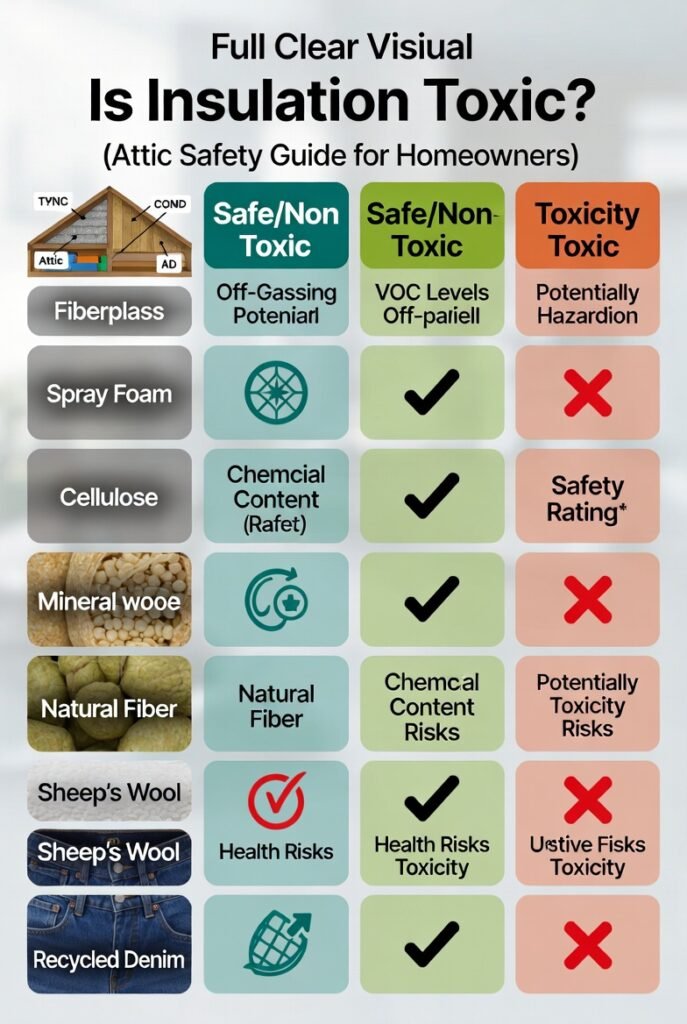
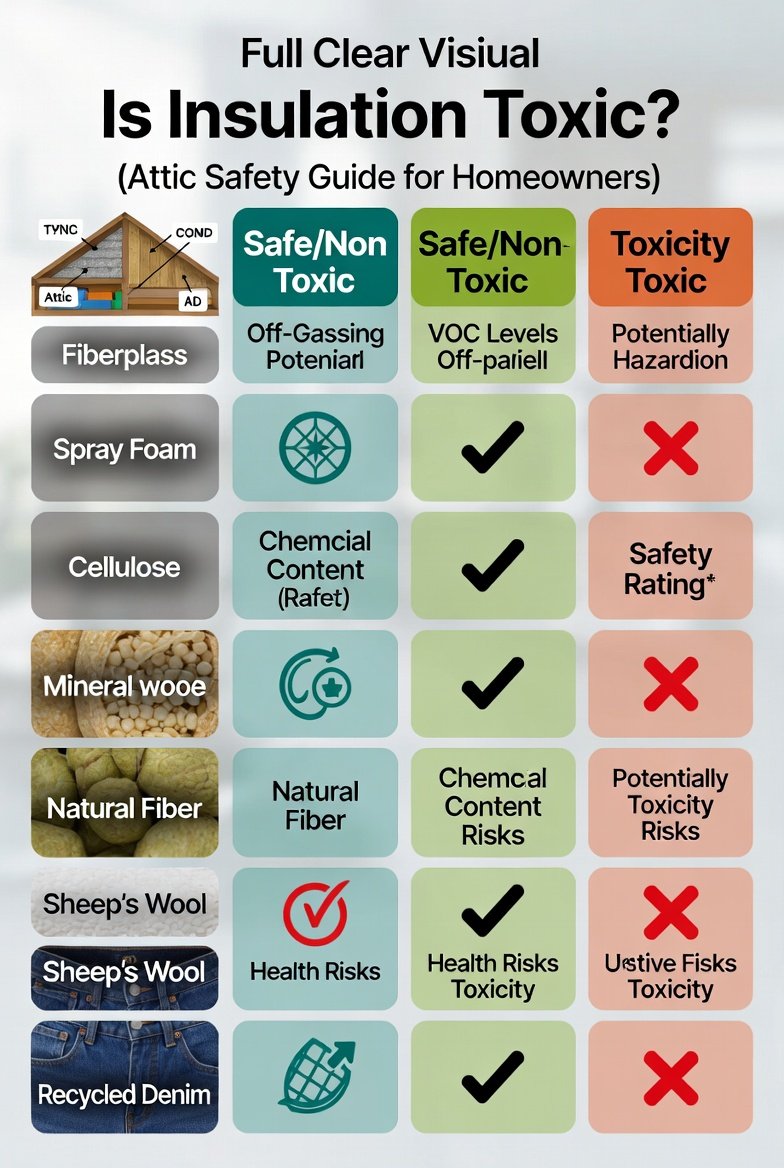
Is Insulation Toxic?
Short answer:
- Most modern attic insulation is not toxic when properly installed and undisturbed.
- It can irritate skin, eyes, and lungs if disturbed.
- Some materials (like spray foam during installation or old vermiculite insulation) require special caution.
“Toxic” is often used loosely.
In attic systems, the real question is exposure and moisture — not whether the insulation itself is poisonous.
This guide separates irritation, chemical exposure, mold risk, and legacy hazards clearly.
TL;DR — Insulation Risk Ladder
🟢 Low Risk (Normal Condition)
- Insulation sitting undisturbed in attic
- No unusual odors
- No visible mold
- No dust entering living space
Action: Leave it alone. Air seal and maintain ventilation.
🟡 Moderate Risk (Disturbance or Moisture)
- You disturbed fiberglass or cellulose
- You notice dust infiltration
- Insulation got wet
Action: Use PPE, correct moisture source, consider professional evaluation.
🔴 Higher Risk (Special Cases)
- Spray foam installation fumes
- Persistent chemical odor after curing
- Suspected vermiculite/asbestos
- Visible mold growth
Action: Stop disturbance and consult qualified professionals.
Material-by-Material Safety Breakdown
Fiberglass Insulation
Primary Concern:
Mechanical irritation.
The CDC notes fibrous glass can irritate eyes, skin, and the respiratory tract depending on exposure level.
fibrous glass
What This Means in an Attic:
- Touching it can cause itching
- Disturbing it can create airborne fibers
- Undisturbed insulation is generally low risk
Not Ideal If:
- Air sealing is incomplete and fibers enter living space
- You plan DIY removal without PPE
Fiberglass is not considered toxic in normal attic conditions, but exposure control matters.
Cellulose Insulation
(Absorbs: cellulose insulation dangers)
Primary Concern:
Dust and moisture sensitivity.
Cellulose is typically 82–85% recycled paper (DOE).
insulation materials
It is treated with fire retardants, commonly borates.
What This Means in an Attic:
- Dust irritation possible during installation
- If wet, can support mold growth
Cellulose itself is not inherently toxic.
Moisture problems create biological risk.
Moisture fundamentals:
attic ventilation tips
Not Ideal If:
- Roof leaks are present
- Attic humidity is uncontrolled
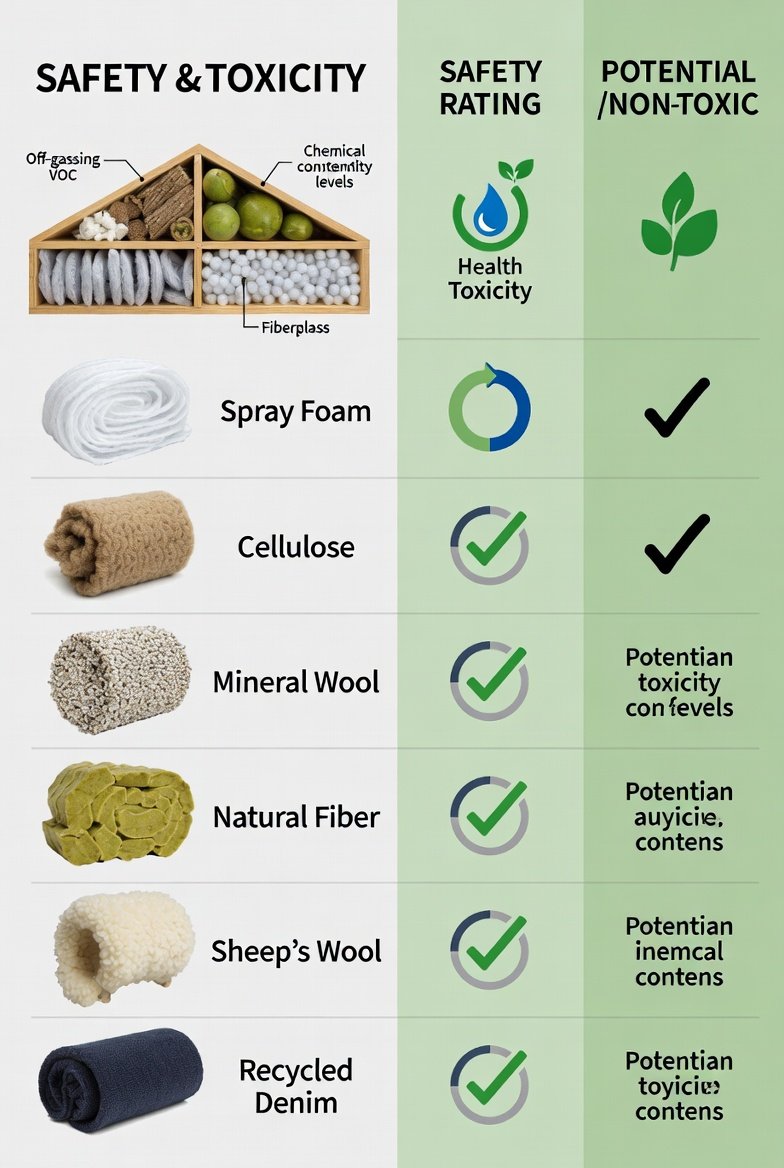
Spray Foam Insulation (Open & Closed Cell)
Primary Concern:
Isocyanate exposure during installation.
NIOSH identifies isocyanates as a leading cause of occupational asthma when exposure occurs during application.
What This Means for Homeowners:
- Risk is primarily during installation
- Proper PPE and ventilation are critical
- Occupants typically vacate during install
After proper curing, risk decreases significantly.
Red Flags:
- Persistent strong chemical odor days after install
- Irritation symptoms after installation
If symptoms persist, contact installer for evaluation.
Comparison of foam types:
open cell insulation
Mineral Wool (Rock Wool)
Primary Concern:
Dust irritation during handling.
Non-combustible and generally stable when undisturbed.
Low toxicity concern in normal attic conditions.
Old Vermiculite / Asbestos Risk
If your attic contains loose, pebble-like gray insulation and home was built before 1990, vermiculite may be present.
Some vermiculite insulation has been found contaminated with asbestos.
Do not disturb suspected vermiculite.
Testing and abatement require licensed professionals.
This is the one scenario where “toxic insulation” may apply.
Moisture and Mold — The Bigger Issue
The EPA explains mold growth depends on moisture and humidity conditions.
indoor air quality guide
Insulation does not create mold on its own.
Mold risk increases when:
- Roof leaks occur
- Bathroom exhaust vents into attic
- Humidity exceeds safe levels
- Ventilation is misconfigured
Insulation becomes a moisture reservoir only when the moisture source remains unresolved.
Air sealing basics:
attic air sealing
When Insulation Becomes a Problem
Insulation may require attention if:
- You see visible mold
- You smell persistent chemical odor after foam install
- Dust is entering living space
- Insulation is water-damaged
- You suspect asbestos contamination
Otherwise, undisturbed attic insulation is generally low risk.
What Not To Do
- Do not shop-vac loose fiberglass without protection
- Do not disturb suspected vermiculite
- Do not cover active moisture problems with new insulation
- Do not remain inside during spray foam application
DIY Disturbance — Basic Safety Steps
If entering attic:
- Wear long sleeves and gloves
- Use proper respiratory protection (N95 or higher when dusty)
- Avoid compressing insulation unnecessarily
- Exit and ventilate if irritation occurs
OSHA recommends exposure controls when handling insulation materials.
weather
Balanced Perspective
Modern insulation materials are designed for building safety and efficiency.
The risks most homeowners worry about usually fall into:
- Temporary irritation
- Installation exposure
- Moisture-related mold
- Rare legacy asbestos contamination
The insulation type alone is rarely the root problem.
Assembly design, moisture control, and disturbance level matter more.
For material comparisons:
best insulation materials
Decision Shortcut
If insulation is:
- Dry
- Undisturbed
- Properly installed
- Not vermiculite
It is unlikely to be toxic in a typical attic.
If insulation is:
- Wet
- Smells strongly chemical after installation
- Causing visible dust infiltration
- Suspected asbestos
Pause disturbance and seek evaluation.
FAQ
Is attic insulation toxic to breathe?
Most modern insulation is not toxic when undisturbed. Disturbing materials can create dust or fiber exposure, which may irritate lungs and airways.
Is fiberglass insulation dangerous?
Fiberglass can irritate skin and lungs during handling, but when undisturbed in an attic it is generally low risk.
Are cellulose insulation chemicals dangerous?
Cellulose contains fire retardants, commonly borates. In normal installed conditions it is not considered toxic, but dust exposure can irritate during installation.
Is spray foam insulation toxic after it cures?
The main risk occurs during installation due to isocyanate exposure. After proper curing, risk significantly decreases.
How do I know if my insulation has asbestos?
Loose-fill vermiculite insulation in older homes may contain asbestos. Do not disturb suspected material and consult a licensed professional for testing.