
Fiberglass vs Cellulose Blown Insulation Cost
If two quotes for blown insulation differ by $2,000 or more, the difference is rarely the fiber.
It’s the scope.
- Was air sealing included?
- Was removal assumed?
- Was R-49 required but priced at R-38?
- Were baffles and clearances addressed?
- Was ventilation evaluated?
Fiberglass and cellulose can both work well in attics. But they behave differently, weigh differently, settle differently, and change labor time.
This guide breaks down real project modeling, not bag price marketing — so you can review bids like an operator, not a brochure reader.
TL;DR — Cost Snapshot
- Fiberglass (blown): ~$1.00–$1.80 per sq ft installed
- Cellulose (blown): ~$1.20–$2.20 per sq ft installed
- Removal (if needed): ~$1.00–$2.50 per sq ft
- Air sealing (separate scope): often $800–$2,500 depending on complexity
Required R-value depends on climate zone. See current DOE-aligned targets here:
R-Value chart
According to the U.S. Department of Energy, most homes require R-38 to R-60 in attics, depending on climate zone (energy.gov).
Real Project Cost Scenarios
Let’s model three realistic attic sizes.
Assume:
- Dry attic
- No major structural issues
- No mold remediation required
Scenario 1 — 1,000 sq ft Attic (Zone 4, Target R-49)
Fiberglass Top-Up (No Removal)
- Material + labor: ~$1,200–$1,600
- Air sealing (if added): +$900–$1,800
- Total range: ~$1,200–$3,400
Cellulose Full Replacement (Removal + Install)
- Removal: ~$1,200–$2,200
- Install: ~$1,300–$2,000
- Air sealing: +$900–$1,800
- Total range: ~$3,400–$6,000
Material difference alone does not create the gap — removal does.
Scenario 2 — 1,500 sq ft Attic (Zone 5, Target R-49 or R-60)
Fiberglass Top-Up
- Install: ~$1,800–$2,700
- Optional air sealing: +$1,200–$2,200
- Total range: ~$1,800–$4,900
Cellulose Full Removal + Install
- Removal: ~$1,800–$3,500
- Install: ~$2,000–$3,200
- Air sealing: +$1,200–$2,200
- Total range: ~$5,000–$8,900
If two quotes differ dramatically, check removal assumptions first.
Scenario 3 — 2,000 sq ft Attic (Zone 6, Target R-60)
Higher R-value increases depth and material volume.
Fiberglass Top-Up
- Install: ~$2,400–$3,600
- Air sealing: +$1,500–$2,500
- Total: ~$2,400–$6,100
Cellulose Replacement
- Removal: ~$2,500–$4,500
- Install: ~$2,800–$4,400
- Air sealing: +$1,500–$2,500
- Total: ~$6,800–$11,400
At larger attic sizes, labor drives cost more than bag price.
What Changes the Quote by 30% or More
Scope Factor | Typical Impact |
Full removal required | +$1.00–$2.50 per sq ft |
R-60 instead of R-38 | +15–35% material |
Full air sealing | +$800–$2,500 |
Difficult attic access | +10–20% labor |
Baffle installation | +$300–$1,200 |
Walk boards / storage rebuild | Variable |
Material choice alone rarely explains major price swings.
R-Value Per Dollar — Practical View
Fiberglass blown: ~R-2.5 to R-3.2 per inch
Cellulose blown: ~R-3.2 to R-3.8 per inch
Cellulose achieves slightly higher R per inch due to density.
But:
- It weighs more.
- It can settle 10–20% over time if underblown.
- Installers compensate by overblowing.
Fiberglass is lighter and does not settle the same way.
If ceiling drywall shows sagging or framing is older, weight matters.
Air Sealing Interaction (Critical but Often Missed)
Insulation does not stop air leakage.
If significant leakage exists, installing high R-value material before sealing can reduce performance efficiency.
Air sealing should be evaluated first:
In some cases, sealing reduces required depth upgrades because leakage — not insulation thickness — was the main issue.
Removal Nuance — Fiberglass vs Cellulose
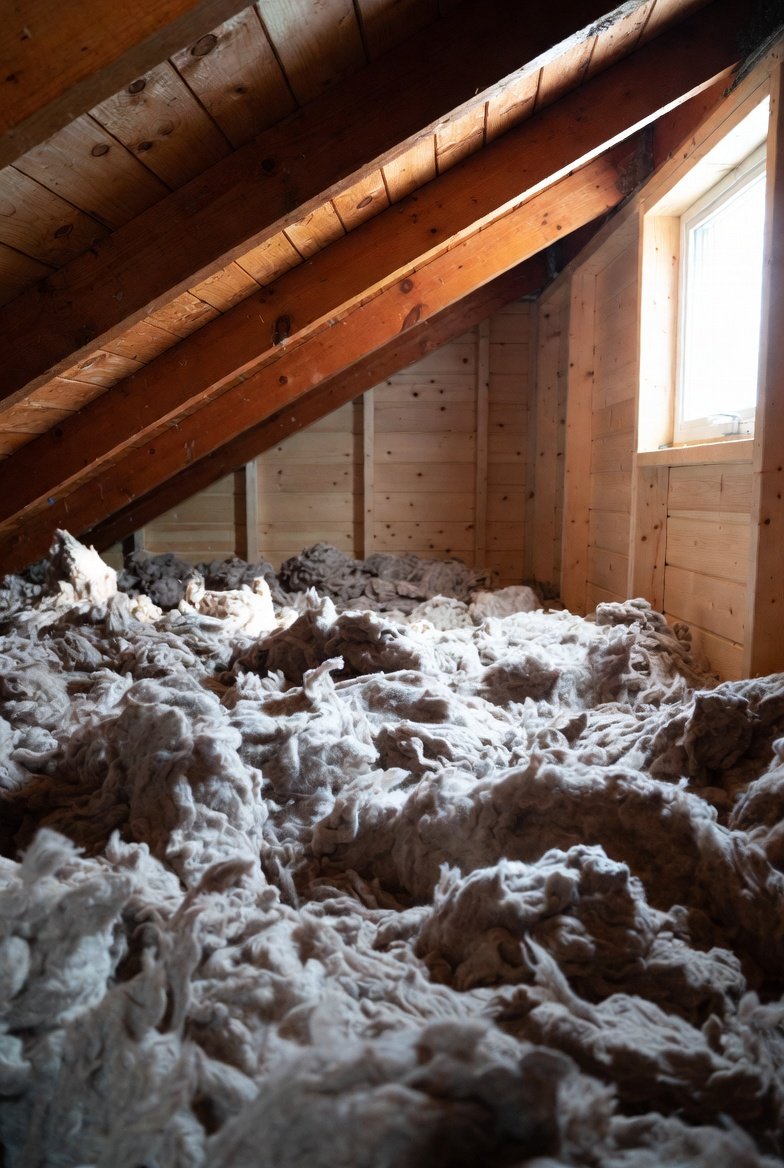
Fiberglass Removal
- Lighter
- Easier vacuum extraction
- Less compacted weight
Cellulose Removal
- Heavier per cubic foot
- Compacts over time
- Disposal can increase hauling cost
Removal complexity explains much of the price gap in comparison bids.
When Fiberglass Usually Makes Sense
- Topping up existing fiberglass
- Older framing with load concerns
- Moisture history in attic
- Want easier future removal
More on fiberglass characteristics here:
Not ideal if:
- Significant air leakage remains unsealed
- Sound dampening is primary goal
- Irregular framing requires dense packing
When Cellulose Usually Makes Sense
- Full removal already required
- Irregular framing cavities
- Desire for higher density coverage
- Sound reduction concerns
Not ideal if:
- Moisture control unresolved
- Ventilation imbalance present
- History of roof leaks
EPA guidance indicates sustained attic humidity above 60% increases mold risk (epa.gov). Insulation does not correct humidity imbalance.
Ventilation fundamentals matter:
attic ventilation tips
When Neither Is the Right Move
Upgrading insulation alone is often the wrong first step if:
- Duct leakage dominates energy loss
- Major top-plate gaps exist
- Bathroom fans vent into attic
- Roof leaks are active
- Ventilation imbalance is unresolved
Insulation does not fix root causes.
Quote Red Flags
If reviewing fiberglass vs cellulose bids, look for:
- No air sealing scope listed
- No depth markers mentioned
- No R-value target specified
- No soffit baffle installation
- No clearance details around flues
- No ventilation evaluation
If a quote seems unusually cheap, check what was excluded — not what fiber was chosen.
Climate Zone Impact
Zone 2–3 (Hot / Humid):
- Moisture management + ventilation priority
- Material choice secondary to airflow control
Zone 4–5:
- Balanced approach (R-49 common target)
Zone 6–7:
- Depth critical (R-60 common)
- Settling allowance must be calculated
Use the insulation calculator to estimate volume needs:
insulation calculator
Decision Shortcut
If attic is:
- Dry
- Structurally sound
- Already fiberglass
→ Fiberglass top-up is often simpler and cost-efficient.
If attic:
- Requires full removal
- Has uneven framing
- Needs higher density coverage
→ Cellulose may justify added cost.
If moisture or ventilation issues exist:
→ Address those first before adding either material.
Scope Confirmation Checklist
Before approving any bid:
- Is air sealing included?
- Is removal included (if needed)?
- Is target R-value specified?
- Are depth rulers installed?
- Are soffit vents protected?
- Are flue clearances maintained?
- Is ventilation evaluated?
Material comparison without scope clarity leads to bad decisions.
Balanced Perspective
Both materials perform when:
- Installed to correct depth
- Air sealing completed
- Ventilation balanced
- Moisture controlled
Failures usually result from incomplete scope — not fiber type.
FAQ
Is cellulose more expensive than fiberglass?
Typically slightly, but removal and air sealing scope affect total project cost more than material difference.
Does cellulose settle over time?
Yes, installers compensate by overblowing to maintain R-value.
Which handles moisture better?
Fiberglass does not absorb moisture. Cellulose can retain moisture if ventilation or humidity issues exist.
Can I mix fiberglass and cellulose?
Sometimes in top-up situations, but airflow behavior and settling should be evaluated carefully.
Is R-60 worth the extra cost?
Depends on climate zone and current insulation depth. Verify target using DOE zone guidance before upgrading.