
Fiberglass Insulation Advantages
Fiberglass insulation is not flashy.
It doesn’t promise dramatic transformation.
It doesn’t claim miracle savings.
Yet it remains the most widely installed attic insulation material in the United States.
Why?
Because for standard vented attic floors, it consistently delivers:
- Reliable thermal resistance
- Low upfront cost
- Fire resistance
- Moisture tolerance
- Installation flexibility
According to the U.S. Department of Energy (DOE), increasing attic insulation to recommended R-levels is one of the most cost-effective energy upgrades in a home. ENERGY STAR similarly recommends R-38 or higher in most U.S. climate zones.
Fiberglass is often the material used to reach those targets.
But the advantages only show up when the system is handled properly.
Air sealing first.
Ventilation intact.
Correct depth.
Skip those — and no insulation performs well.
(If air leakage hasn’t been addressed yet, start here:
👉 attic air sealing
TL;DR — When Fiberglass Is the Right Choice
Choose fiberglass if:
- Your attic is vented and dry
- You need affordable depth to reach R-38 to R-49
- You want a non-combustible material
- You plan future access or modifications
- Air sealing has already been completed
Avoid relying on fiberglass alone if:
- The attic is severely air-leaky
- You’re converting the attic to conditioned space
- You need maximum R-value in minimal depth
1️⃣ Cost Efficiency Per R-Value
Fiberglass is typically the lowest upfront cost insulation for attics.
Relative installed cost comparison:
Material | Relative Install Cost | Typical R per Inch | Cost Efficiency |
Fiberglass | Lowest | 3.0–3.7 | High |
Cellulose | +10–20% | 3.2–3.8 | Moderate |
Mineral Wool | Moderate | ~3.0 | Moderate |
Spray Foam | 3–5× higher | 3.5–7.0 | Low (per dollar) |
While spray foam offers higher R per inch, most vented attic floors have ample depth. The goal isn’t maximizing per-inch performance — it’s reaching the target R-value economically.
Full cost analysis here:
👉attic insulation cost
For standard attic floors, fiberglass delivers the lowest cost per achieved R-38 or R-49 depth.
2️⃣ Meets Code-Recommended R-Value Targets
ENERGY STAR and IECC climate guidelines recommend attic insulation levels based on zone.
Typical U.S. requirements:
- Southern zones: R-30 to R-38
- Mixed climates: R-38
- Colder climates: R-49 or higher
Fiberglass can reach these levels by depth:
- R-38 ≈ 10–13 inches
- R-49 ≈ 14–16 inches
See full depth chart here:
👉 R-Value chart
When installed at proper thickness, fiberglass reliably meets energy efficiency standards.
3️⃣ Blown vs Batt — Attic-Specific Advantage
There are two main fiberglass formats:
Fiberglass Batts
- Pre-cut sections
- Good for clean joist bays
- Easier for DIY projects
- Must be carefully fitted to avoid gaps
Blown-In Fiberglass
- Installed with blowing machine
- Fills irregular areas
- Reduces voids around wiring and penetrations
- Better coverage across large attic floors
Blown fiberglass typically settles minimally when installed at correct density — often less than cellulose.
For open attic floors, blown fiberglass often produces more uniform coverage.
If you’re renting equipment:
👉 machine rental
4️⃣ Fire Resistance
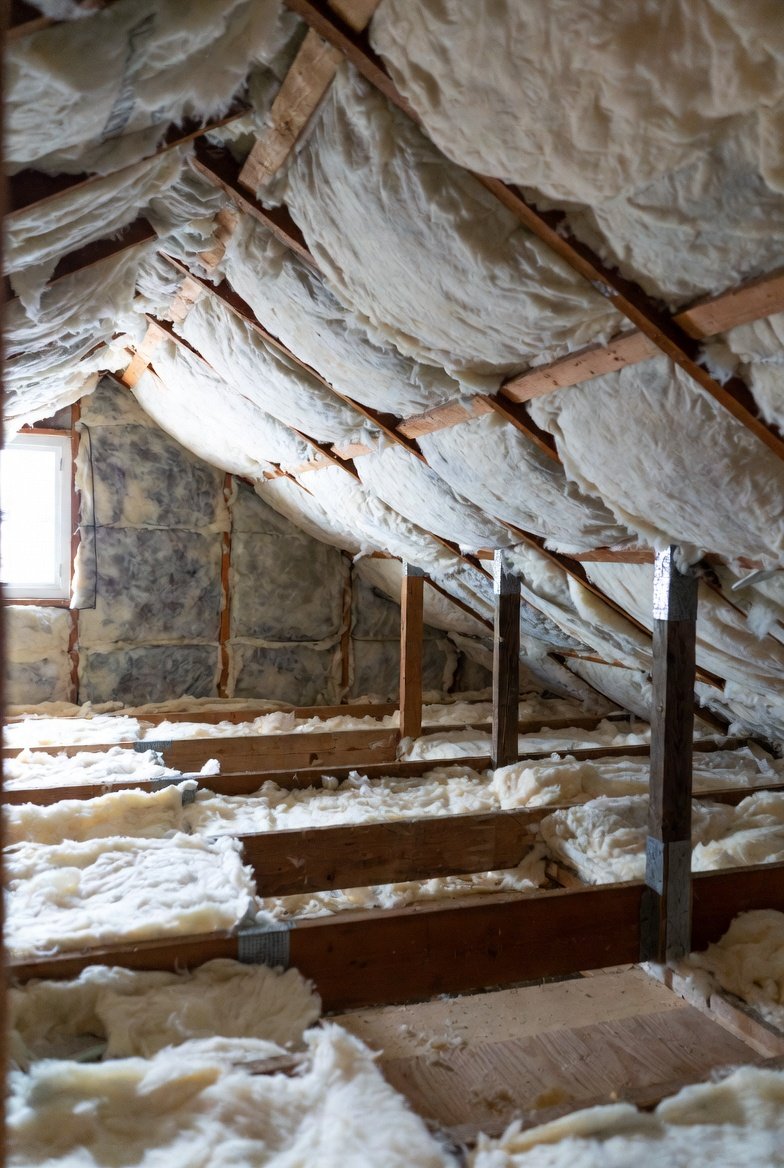
Fiberglass is made from spun glass fibers.
It is non-combustible.
This makes it inherently safer than some organic insulation materials.
However:
- Do not block flues or chimneys
- Maintain clearance around recessed lighting
- Use baffles at soffits
Fire resistance doesn’t override proper installation practices.
5️⃣ Moisture Tolerance (With Important Nuance)
Fiberglass does not absorb water like cellulose.
But here’s the part many guides skip:
Wet fiberglass loses insulating effectiveness until it dries.
It does not “wick” moisture, but saturated fibers reduce R-value temporarily.
EPA guidance notes that maintaining attic humidity below 60% reduces mold risk.
If condensation is present, fix the root cause first:
👉 attic moisture problem
Insulation is not a moisture control system.
Ventilation and air sealing are.
6️⃣ Longevity & Stability
When dry and undisturbed, fiberglass insulation can last 20–30+ years.
Performance degradation typically occurs from:
- Compression
- Storage boards pressing down batts
- Chronic moisture
- Air movement washing through fibers
It does not significantly decay or break down under normal conditions.
Where Fiberglass Underperforms
Fiberglass is not ideal if:
- You need an air barrier
- You’re insulating roof rafters instead of attic floor
- You require high R in shallow cavities
It slows heat transfer.
It does not stop airflow.
Seal first:
👉 attic air sealing
Vent properly:
👉 attic ventilation tips
Then insulate.
Common Installation Errors That Reduce Performance
- Compressing batts under storage
- Leaving voids around penetrations
- Blocking soffit vents
- Installing without prior air sealing
Even the best insulation fails if airflow bypasses it.
Decision Shortcut — 30-Second Map
If attic is:
- Dry + vented + open floor → Blown fiberglass
- DIY + uniform joists → Batts
- Air-leaky → Air seal first
- Low clearance cavity → Consider foam
- Irregular framing → Consider cellulose
Match the material to the problem — not the marketing.
Expanded FAQs
Can I layer fiberglass over existing cellulose?
Yes, if the existing insulation is dry and not contaminated.
Does blown fiberglass settle?
Minimal settling occurs when installed at proper density.
What depth is optimal for energy savings?
Most homes require R-38 minimum. Colder climates require R-49+.
Is fiberglass safe?
Yes. It is non-combustible and widely code-approved.
How long does fiberglass insulation last?
20–30+ years when dry and undisturbed.
Is fiberglass better than spray foam?
For standard vented attic floors, fiberglass is more cost-effective. Spray foam is typically used when air sealing and high R per inch are required.