
DIY Attic Insulation Guide (Read This Before You Start)
Most DIY attic insulation projects fail for one reason: people treat insulation like a magic fix.
It isn’t.
Insulation is a thermal layer. It does not fix:
- Air leaks
- Moisture problems
- Ventilation imbalance
If you keep those boundaries clear, a DIY attic insulation project can be clean and effective. If you blur them, you risk burying problems under fluffy material.
This guide keeps the scope tight.
TL;DR — Fast Decision Map
- If the attic is damp, stained, or smells musty → stop. Fix moisture first.
- If insulation is just low and the attic is dry → DIY top-up is realistic.
- Protect soffit vents. Never block intake airflow.
- Verify recessed light type before burying anything.
- Measure depth before and after. Never guess.
Step 0 — The Three Stop Signs
1) Moisture Stop Sign
Insulation should never go over:
- Wet insulation
- Roof deck staining from active leaks
- Visible mold growth
- Bathroom fans venting into the attic
Humidity above 60% RH increases mold risk. If you’re in that range, insulation is not your first move.
2) Wiring & Heat Source Stop Sign
Pause if you see:
- Knob-and-tube wiring
- Multiple recessed can lights with unknown ratings
- Combustion vent pipes you don’t understand
Do not bury unknown heat sources.
3) Ventilation Path Stop Sign
Your job is not to redesign ventilation.
Your job is to not break it.
Soffit vents must remain open. Install baffles at the eaves so insulation cannot choke airflow.
What This Guide Covers (Attic-Only Scope)
This guide covers:
- Attic insulation DIY planning
- Measuring existing insulation
- Choosing blown-in vs batts
- Safe blown-in installation workflow
- Attic insulation checklist
- “Not ideal if” decision triggers
It does not cover full air sealing detail or ventilation redesign. Those are separate scopes.
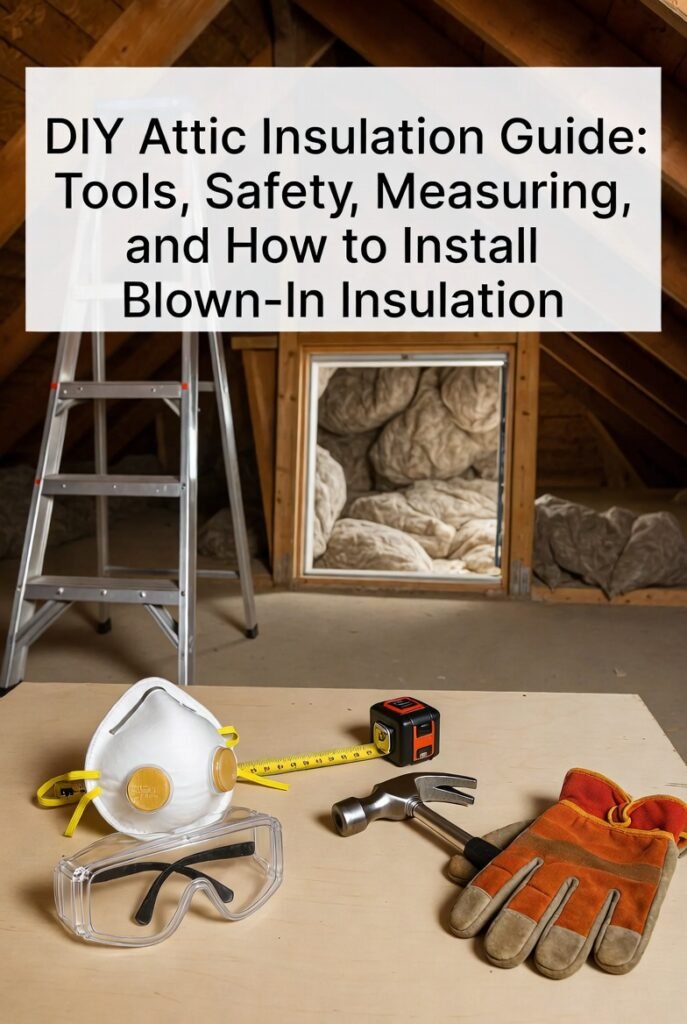
Tools & PPE (Minimal but Non-Negotiable)
Core Tools
- Tape measure
- Marker
- Utility knife
- Staple gun (for baffles and depth markers)
- Headlamp or work light
- Plywood boards (to walk across joists)
- Blowing machine rental (for loose-fill installs)
Safety Gear
- Gloves
- Eye protection
- Long sleeves/pants
- N95 or better respirator
Attics are dusty. Fiberglass and cellulose irritate skin and lungs. Respect the space.
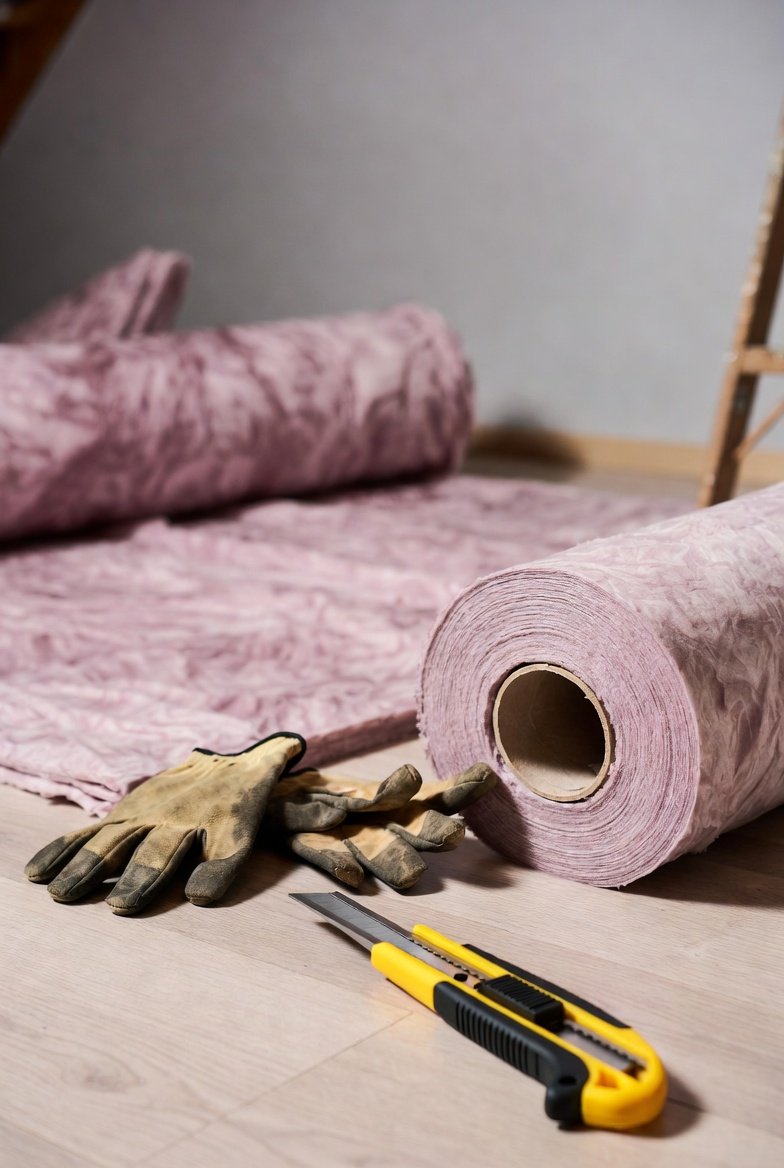
Blown-In vs Batts — Quick Decision
Blown-In Is Better When:
- You’re topping up existing loose fill
- The attic has obstructions (pipes, wiring, uneven bays)
- You want consistent coverage over irregular surfaces
Batts May Work When:
- Open joist bays are clean and accessible
- You can install without gaps or compression
- You prefer a simpler setup
For most DIY upgrades, blown-in is the cleaner choice.
How to Measure Existing Attic Insulation (Don’t Guess)
Step 1 — Measure Attic Floor Area
Length × width of attic floor.
Subtract major areas that won’t be insulated.
Write down total square footage.
Step 2 — Measure Existing Depth (6–10 Locations)
Measure:
- Near hatch
- Center
- Corners
- Two areas near eaves
Record the range (example: 4–6 inches).
One measurement is not enough.
Step 3 — Determine Target R-Value by Climate Zone
Use DOE or ENERGY STAR R-value tables.
Typical attic targets range between R-38 and R-60 depending on climate zone.
If you need a simplified breakdown:
R-Value chart
Step 4 — Convert R-Value to Depth & Bag Count
Loose-fill insulation bags list:
- Coverage area at specific R-values
- Required installed thickness
Use your attic square footage and the bag chart.
Then verify with depth markers during install.
For fast estimating:
attic insulation calculator
Air Sealing — Referenced, Not Blended
Air sealing improves insulation performance.
But don’t turn this into a half-done air sealing project.
Handle obvious fixes:
- Attic hatch gasket
- Large visible penetrations
For the full workflow:
Keep scopes separate. That prevents chaos.
How to Install Blown-In Insulation (Step-by-Step)
Step 1 — Create Safe Walking Paths
Never step on drywall.
Walk on joists or lay plywood across framing members.
Strong lighting is mandatory.
Step 2 — Install Baffles at Eaves
At soffits, install rafter vents/baffles.
Purpose:
- Maintain airflow
- Prevent insulation from blocking intake vents
Skipping this step causes moisture problems.
Step 3 — Install Depth Markers
Staple rulers or mark rafters at your target depth.
Place markers in:
- Center zones
- Near hatch
- Near eaves
Depth markers are your truth source.
Step 4 — Handle Recessed Can Lights Correctly
If fixtures are non-IC rated:
- Maintain required clearance
- Use approved protective enclosures
If you can’t verify rating, don’t guess.
Step 5 — Machine Setup
Two-person workflow:
- Person 1 feeds hopper
- Person 2 handles hose
Start at the farthest area from attic access and work backward.
Step 6 — Blow Even Coverage
- Sweep slowly
- Fill low areas first
- Avoid building uneven mounds
- Check markers constantly
Your goal is uniform installed thickness.
Step 7 — Final Verification
After blowing:
- Re-measure depth at original 6–10 locations
- Correct thin spots
- Confirm soffit vents remain open
- Ensure attic hatch is insulated properly
No verification = unfinished job.
Before and After — What Actually Changes
What Improves
- More stable indoor comfort
- Reduced temperature swings
- Less heat transfer through ceilings
What Does NOT Improve
- Air leaks
- Moisture problems
- Poor ventilation design
Insulation cannot fix structural or airflow problems.
Not Ideal If… (When DIY Is a Bad Move)
DIY attic insulation is not recommended if:
- Insulation is damp or moldy
- Active roof leaks exist
- Knob-and-tube wiring is present
- Numerous recessed can lights are unverified
- Attic access is unsafe or too tight
In those cases, measure and document—but consider professional installation.
Attic Insulation Checklist
Planning
- Measure attic square footage
- Measure existing insulation depth
- Confirm target R-value
- Estimate bag count
- Plan depth markers
- Inspect moisture conditions
Safety
- PPE ready
- Walking boards installed
- Recessed light rating verified
- Soffit vents identified
Install
- Baffles installed
- Blow from far end toward hatch
- Maintain even coverage
- Monitor depth markers
Verify
- Final depth re-measured
- Thin areas corrected
- Ventilation pathways open
- Hatch insulated
Quick Verdict
If your attic is dry, accessible, and under-insulated, DIY blown-in insulation is achievable with proper prep and verification.
If moisture, wiring, or ventilation concerns exist, DIY becomes risk management—not a savings strategy.
The difference between a clean upgrade and a buried problem is preparation.
FAQs
How do I know if my attic insulation is enough?
Measure depth in multiple locations and compare to recommended R-values for your climate zone.
Can I blow insulation over existing insulation?
Yes, if the existing insulation is dry and uncontaminated.
Do I need to air seal first?
Air sealing improves results, but treat it as a separate scope so it’s done correctly.
What’s the biggest DIY mistake?
Blocking soffit vents and failing to verify installed depth.
When should I hire a professional?
If moisture issues, unsafe wiring, unclear recessed lighting ratings, or unsafe access conditions are present.