
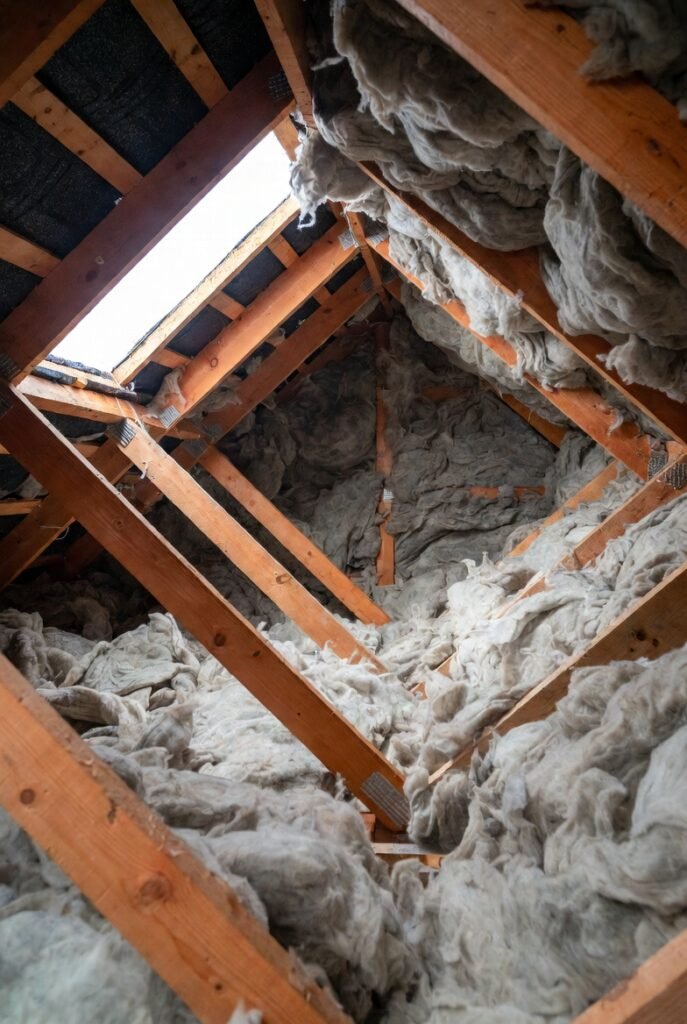
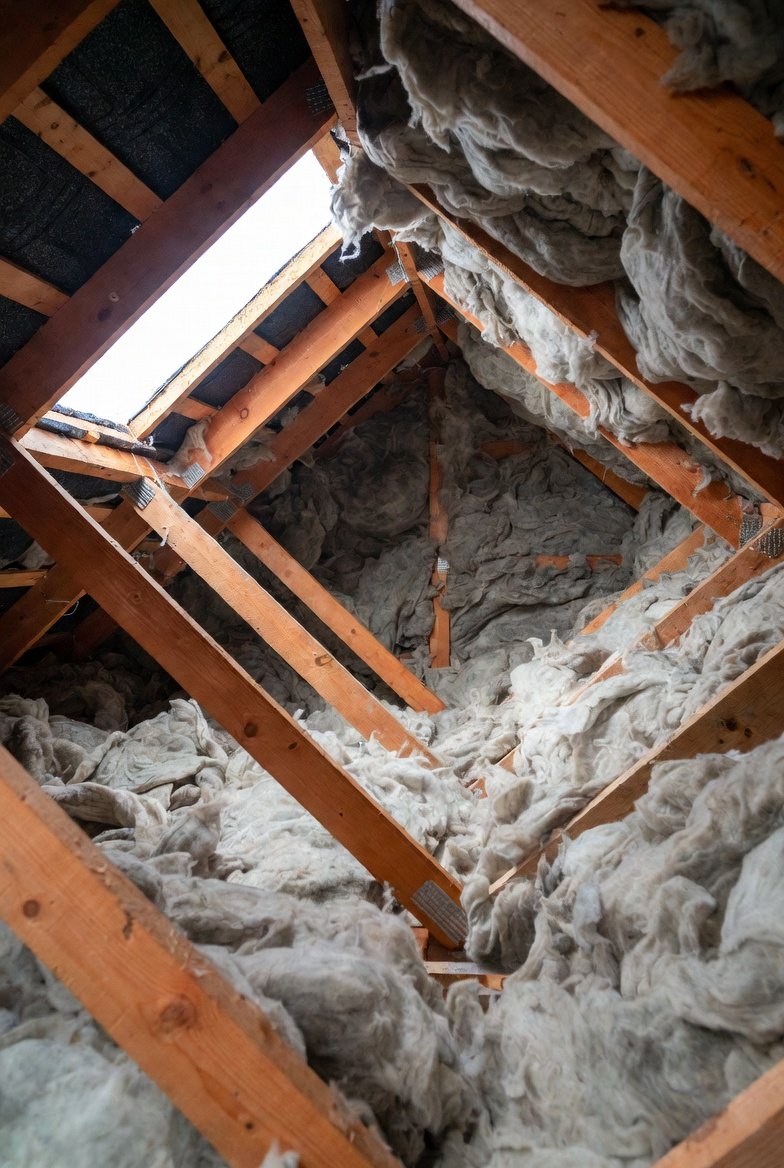
Cellulose Insulation in Attics
Cellulose insulation isn’t better because it’s recycled.
It isn’t worse because it settles.
In attic floors, cellulose performs extremely well — when the attic system is correct.
If the attic is damp, leaky, or poorly ventilated, no insulation will fix that.
The U.S. Department of Energy makes this clear: insulation reduces heat flow, but performance depends on reaching recommended R-levels and controlling air movement and moisture.
Before we go deeper, if you’re still comparing all materials broadly:
👉 best insulation tips
⚡ Quick Decision TL;DR
Cellulose usually wins when:
- The attic floor is irregular or messy
- You’re doing an attic insulation top-up
- Sound dampening matters
- The attic is dry and properly vented
Cellulose struggles when:
- There’s chronic moisture
- Ventilation is unbalanced
- Ceiling framing is weak
- The attic has very low clearance depth
Non-negotiable:
👉 Air seal first —
What Cellulose Insulation Actually Is (Attic Context Only)
Cellulose insulation is typically made from recycled paper fiber treated with fire-retardant additives.
In attics, it’s installed as:
Loose-Fill Cellulose (Attic Floors)
Blown across the attic floor to target depth.
Dense-Pack Cellulose (Walls, Not Attic Floors)
Packed tightly into enclosed cavities at higher density.
Dense-pack is often misunderstood in attic discussions — it’s primarily a wall method.
Climate Zone R-Value & Depth Reference
ENERGY STAR provides recommended insulation levels by climate zone.
DOE similarly outlines attic insulation targets by zone.
Quick Reference Table
Climate Type | Common Target | Approximate Cellulose Depth* |
Warm (South) | R-30–R-38 | ~8–12 inches |
Mixed | R-38 | ~10–14 inches |
Cold | R-49–R-60 | ~14–18+ inches |
*Depth varies by product and density. Always confirm using product specs and climate guidance.
Full depth guide here:
👉R-Value chart
How Cellulose Performs in Attic Floors
Thermal Resistance
Cellulose typically provides strong R-value per inch when installed correctly.
But here’s the key nuance:
Thermal performance depends more on consistent depth + dryness than marketing claims.
Compression, air leaks, and moisture undermine performance faster than “material choice” differences.
Airflow Interaction
Cellulose is denser than fiberglass.
That density can reduce “air washing” through insulation compared to low-density batts.
But:
❗ Cellulose is NOT an air barrier.
If air is leaking through top plates, chases, or attic hatches, sealing must happen first.
Air sealing hub:
👉 attic air sealing
Loose-Fill vs Dense-Pack (Visual Comparison Grid)
Feature | Loose-Fill Cellulose | Dense-Pack Cellulose |
Used In | Attic floors | Wall cavities |
Install Method | Blown across floor | Packed tightly into cavity |
Settlement Risk | Moderate if under-dense | Low |
Weight | Moderate | Higher |
Best Use | Top-up or full attic coverage | Enclosed cavities |
Most attic installs use loose-fill.
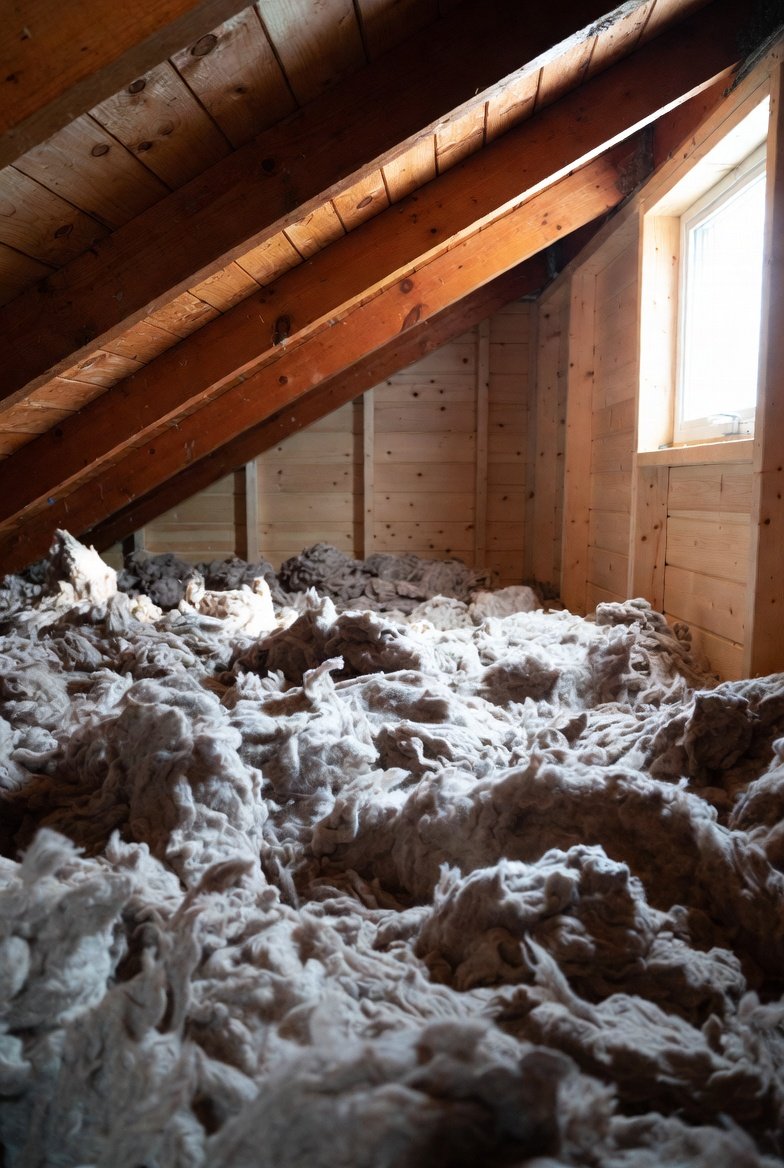
Settlement: What’s Normal vs What’s a Bad Install
Settlement is the most misunderstood issue.
Professional installers:
- Use depth rulers
- Blow slightly above target depth
- Ensure uniform coverage
Problems occur when:
- Density is too low
- Coverage is uneven
- Obstacles create voids
Checking settled depth later is simple:
- Measure insulation depth in multiple locations
- Compare to recommended R-value target
Moisture Risk (Critical Section)
Cellulose can absorb moisture.
EPA guidance recommends keeping indoor humidity below 60%, ideally 30–50%, to reduce mold risk.
❗ Moisture Warning
If your attic has:
- Frost on roof decking
- Bathroom fans venting into attic
- Visible condensation
Fix ventilation first:
👉 attic ventilation tips
Moisture control beats insulation upgrades every time.
Edge Cases: Where Cellulose Fails
Low-Clearance Attics
If you need R-49 but only have 8 inches of cavity depth, cellulose may not achieve required insulation levels without structural changes.
Humid Attics
Without ventilation correction, cellulose may hold moisture longer than fiberglass.
Weak Framing
Older ceilings may require load assessment before adding heavy layers.
Expanded Comparison: Cellulose vs Fiberglass
Factor | Cellulose | Fiberglass |
Coverage in irregular attic | Excellent | Good (batts may leave gaps) |
Moisture tolerance | Absorbs moisture | Does not absorb water |
Fire behavior | Treated for resistance | Non-combustible |
Sound dampening | Strong | Moderate |
DIY friendliness | Moderate | Higher (batts) |
Lifespan (dry conditions) | Decades | Decades |
Installation difficulty | Moderate | Easy–Moderate |
Fiberglass reference:
👉 fiberglass ventilation
Installer-Level Tips
- Install soffit baffles before blowing insulation.
- Avoid burying recessed lights unless rated for contact.
- Ensure bathroom exhaust ducts vent outside, not into attic.
- Use rulers to verify consistent depth across attic.
Decision Flow (Simple Map)
If attic is:
- Dry + irregular → Cellulose strong option
- Dry + clean open floor → Either works
- Moisture present → Fix moisture first
- Air leakage present → Seal first
- Low clearance → Consider higher R-per-inch materials
Expanded FAQs
Does cellulose insulation settle in the first year?
Some settling can occur. Proper installation compensates by installing to measured depth.
Can cellulose be installed over fiberglass?
Often yes, if the existing insulation is dry and in good condition.
Is cellulose safe from a fire standpoint?
Cellulose is treated with fire retardants and tested under standards like ASTM E84 for surface burning characteristics.
How do I check if my attic insulation is enough?
Measure depth in multiple areas and compare to climate-zone R-value recommendations from ENERGY STAR.
Does cellulose mold?
If moisture persists, mold risk increases. EPA recommends humidity control to reduce mold growth risk.