
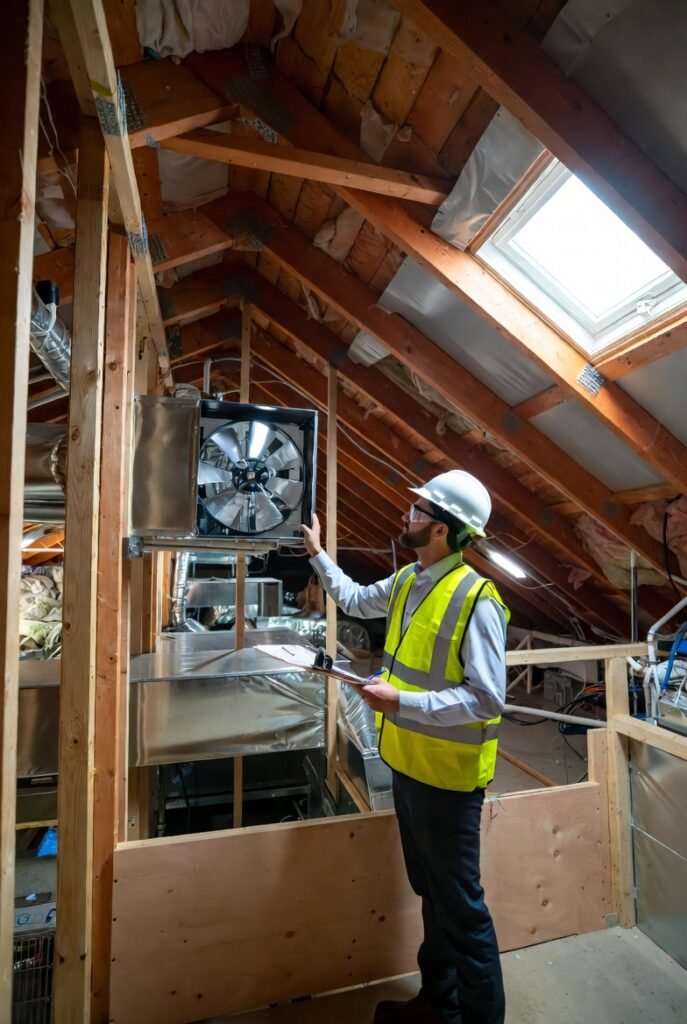
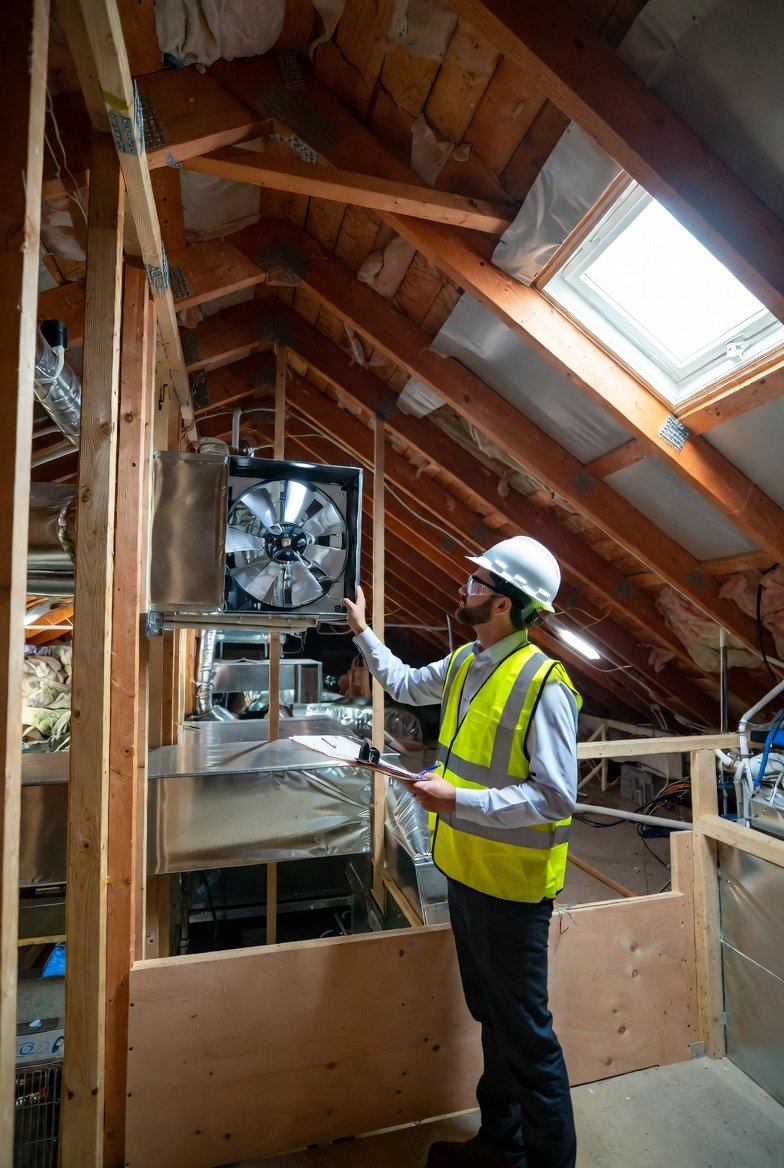
Attic Ventilation Contractor: A Hiring Guide That Protects the System — Not Just the Roof
Most ventilation contractors sell vents.
Very few design airflow.
Attic ventilation is not about adding hardware. It’s about creating a balanced airflow system that works with insulation and air sealing — not against them.
If you are searching for attic ventilation contractors near me, this guide helps you:
- Avoid unnecessary ridge vent upgrades
- Avoid powered fan pressure problems
- Avoid blocking soffit intake
- Avoid confusing moisture with ventilation
This is a national hiring guide.
No city pages. No hype. Just scope clarity.
TL;DR — When to Hire an Attic Ventilation Contractor
Hire if:
- You suspect intake/exhaust imbalance
- Roof sheathing shows condensation or frost
- You’re replacing roofing and reworking vents
- You have ridge vent but no confirmed intake
Pause if:
- You haven’t evaluated air sealing
- Insulation depth is insufficient
- There are roof leaks
Ventilation manages airflow.
It does not fix moisture intrusion.
It does not seal air leaks.
Start here for fundamentals:
attic ventilation tips
What a Real Ventilation Contractor Should Calculate
If they don’t calculate, they’re guessing.
A competent contractor should:
- Measure attic square footage
- Determine required ventilation area (Net Free Area concept)
- Confirm intake capacity
- Confirm exhaust capacity
- Evaluate insulation interaction
Simplified NFA Concept (No Code Jargon)
Ventilation design uses a ratio approach:
Attic size → required vent area → split between intake and exhaust.
If intake is insufficient, exhaust vents pull conditioned air from the house.
If exhaust is insufficient, intake stalls airflow.
Balance matters more than quantity.
How Intake vs Exhaust Actually Works
Ventilation only works when airflow moves from low (soffit) to high (ridge).
Balanced System
- Soffit vents open and clear
- Baffles protect intake
- Ridge vent provides exhaust
Unbalanced System
- Ridge vent only
- Gable vents conflicting
- Powered fan with limited intake
Unbalanced systems create pressure distortion and uneven airflow.
Climate Nuance (Most Pages Skip This)
Cold climates
- Moisture migration from interior air is common
- Condensation on roof sheathing often signals air leakage + poor ventilation
Hot humid climates
- Over-ventilation can introduce humid exterior air
- Powered fans can worsen negative pressure
Ventilation strategy differs by climate.
A real contractor acknowledges that.
When Ventilation Is Not the Fix
This is where homeowners get misled.
Interior Air Leakage
Warm moist air leaking from the home into the attic causes condensation.
That’s an air sealing issue first.
attic air sealing
Insufficient Insulation
Low R-value causes heat transfer issues.
Ventilation doesn’t increase insulation performance.
R-Value chart
Roof Leaks
Bulk water is roofing repair, not ventilation.
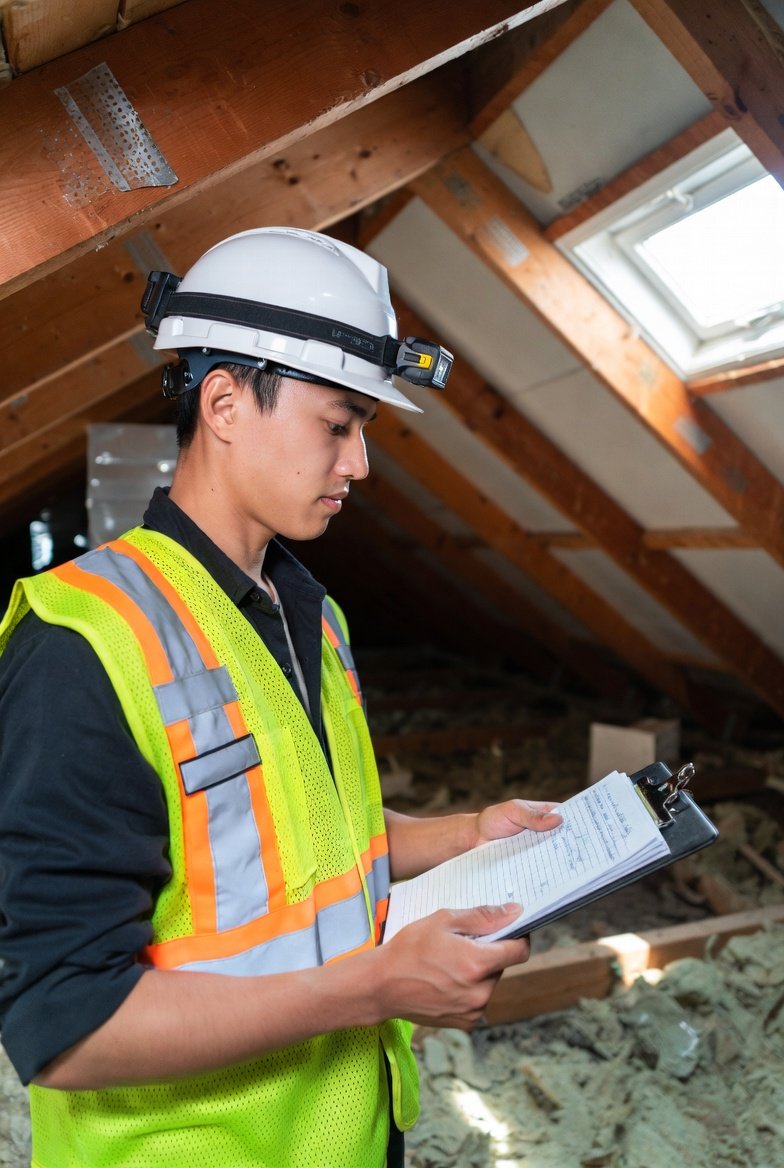
Ventilation System Types (And When They Work)
Ridge + Soffit
Works best when:
- Continuous ridge
- Clear intake pathways
Fails when:
- Soffits blocked
- Intake insufficient
Gable Vents
Can work in simple layouts.
Can conflict with ridge systems.
Powered Attic Fans
Can create negative pressure.
Often oversold as heat solutions.
Require careful intake verification.
Mini Decision Matrix — Should You Hire?
Situation | Hire Ventilation Contractor? |
Roof replacement + vent redesign | Yes |
Condensation + blocked soffits | Yes |
Low insulation depth only | No |
Bathroom vent dumping into attic | No — fix ducting first |
Mold limited to sheathing | Maybe — evaluate airflow |
Red Flags in Contractor Quotes
- “You need more vents” without measurement
- Recommending powered fans immediately
- Ignoring intake pathways
- No discussion of airflow balance
- No inspection of insulation depth
Ask them to explain airflow logic.
If they cannot, move on.
Cost Considerations (Scope-Based, Not Flat Pricing)
Costs vary based on:
- Ridge length
- Soffit condition
- Roof pitch
- Accessibility
- Interior baffle installation
Ventilation upgrades range widely depending on system redesign vs simple intake restoration.
No fixed pricing is responsible here.
Mini Case Studies
Case 1 — Intake Blocked
1,400 sq ft attic
Ridge vent present
Soffits packed with insulation
Solution: Install baffles, clear intake
Result: Balanced airflow without adding vents
Case 2 — Over-vented
2,000 sq ft attic
Ridge + gable + powered fan
Solution: Remove fan, rebalance system
Result: Stable airflow and reduced pressure imbalance
Case 3 — Misdiagnosed
Condensation reported
Inspection revealed bathroom duct disconnected
Solution: Fix ducting
Ventilation not modified
Hiring Checklist (Use This Script)
Ask:
- How do you calculate required ventilation area?
- How do you confirm intake isn’t blocked?
- Will insulation depth be evaluated?
- What happens if airflow is unbalanced?
- Do you install baffles when needed?
You’re not hiring a vent installer.
You’re hiring a system designer.
Not Ideal If
Do not hire ventilation upgrades yet if:
- Air sealing hasn’t been evaluated
- Insulation depth is unknown
- Moisture source is interior leakage
- Roof leaks are unresolved
Ventilation should not be the first reaction.
Quick Verdict
Hire an attic ventilation contractor if airflow balance is genuinely in question.
Do not hire one just because your attic feels hot.
Heat alone is not diagnosis.
Airflow logic is.
If you want foundational airflow education first:
attic ventilation tips
FAQs
How do I find attic ventilation contractors near me
Search for roofing or building envelope contractors who calculate intake and exhaust balance before recommending changes.
Does adding more vents improve ventilation
Not necessarily. Balance matters more than quantity.
Can ventilation fix attic mold
Only if airflow imbalance is the cause. Mold from leaks or interior air leakage requires different solutions.
Are powered attic fans recommended
Only in specific scenarios. Improperly installed fans can create pressure imbalance.
Should insulation be checked during ventilation upgrades
Yes. Insulation depth affects overall attic performance and airflow interaction.