
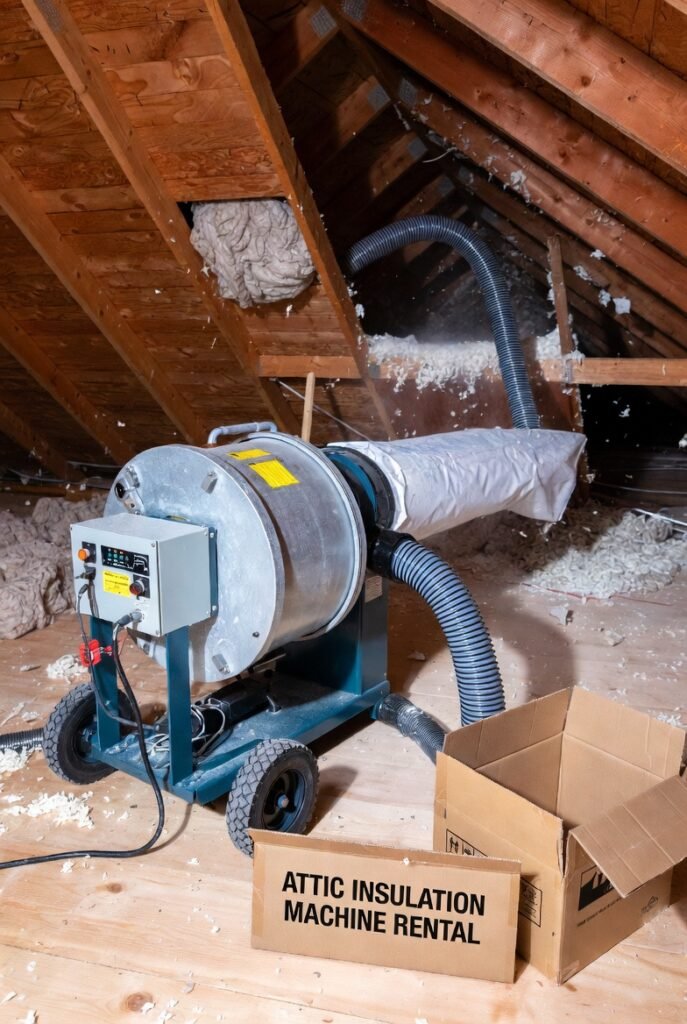
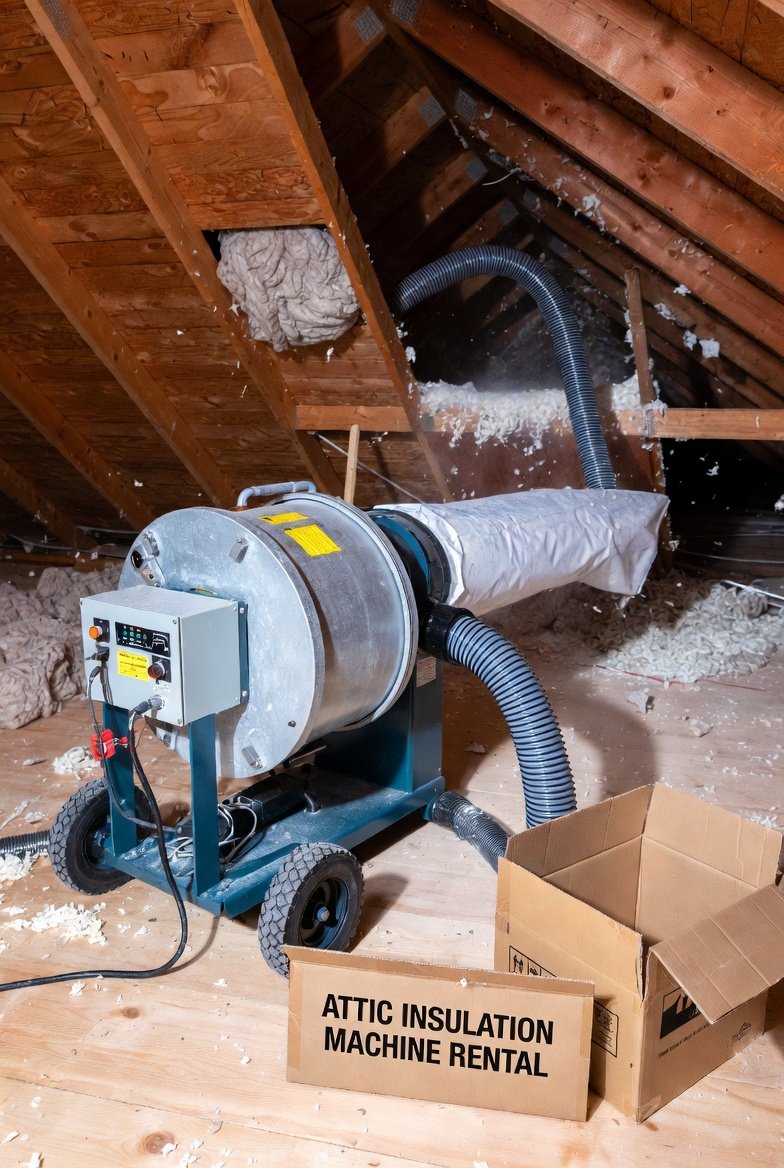
Attic Insulation Machine Rental — The Practical Decision Guide
Renting an attic insulation blower sounds simple.
Buy insulation.
Use machine.
Blow material.
In reality, success depends on:
- Attic condition
- Access limitations
- Ventilation protection
- Electrical safety
- Depth verification
The machine is just a tool.
Preparation determines outcome.
TL;DR — 7 Fast Checks Before Renting
- ✔ Attic is dry (no damp insulation, no stains)
- ✔ Recessed light type verified
- ✔ No knob-and-tube wiring
- ✔ Soffit vents can be protected
- ✔ Two people available
- ✔ Job can be completed in 24 hours
- ✔ You understand your target R-value
If two or more of these are uncertain, pause before renting.
Blower Rental Costs — What You Actually Pay
Free Rental With Insulation Purchase
Most retailers offer:
- 24-hour rental
- Free with minimum bag purchase (often 10–20 bags)
You’re paying for insulation volume.
Paid Daily Rental
If you don’t meet minimum bag count:
- Expect daily rental fee
- Deposit may apply
- Additional day fees stack quickly
Time discipline matters.
Rental Cost Modeling Table (Example Ranges)
Attic Size | Estimated Bags | Material Cost Range | Rental Cost | Typical Contractor Range |
800–1,000 sq ft | 12–18 | Moderate | Often Free | Higher (labor included) |
1,200–1,500 sq ft | 18–25 | Higher | Often Free | Higher |
1,800–2,200 sq ft | 25–35 | Significant | Free or Paid | Comparable depending on complexity |
Use real calculations here:
attic insulation calculator
Compare with full install pricing:
attic insulation cost
Machine Types — What You’re Actually Renting
Retail Single-Stage Blowers
- Standard rental unit
- Designed for attic floor loose-fill
- Suitable for fiberglass or cellulose
Contractor-Grade Systems
- Higher output
- Denser packing
- Rarely available in retail rental
Not needed for simple attic top-up projects.
DIY vs Contractor — Blower Usage Comparison
Factor | DIY Rental | Contractor |
Labor Cost | None (your time) | Included |
Speed | Slower | Faster |
Risk | DIY responsibility | Contractor assumes |
Complex Geometry | Harder | Easier |
Moisture Diagnosis | Limited | Professional assessment |
Attic Condition Verification (Critical Step)
Moisture Boundary
Do not blow insulation over:
- Damp insulation
- Roof deck staining
- Musty odor
Insulation is not moisture repair.
Ventilation Protection
Install baffles before blowing.
Learn airflow basics here:
attic ventilation tips
Air Sealing — Separate Scope
Complete air sealing before rental day:
attic air sealing
Keep scopes clean.
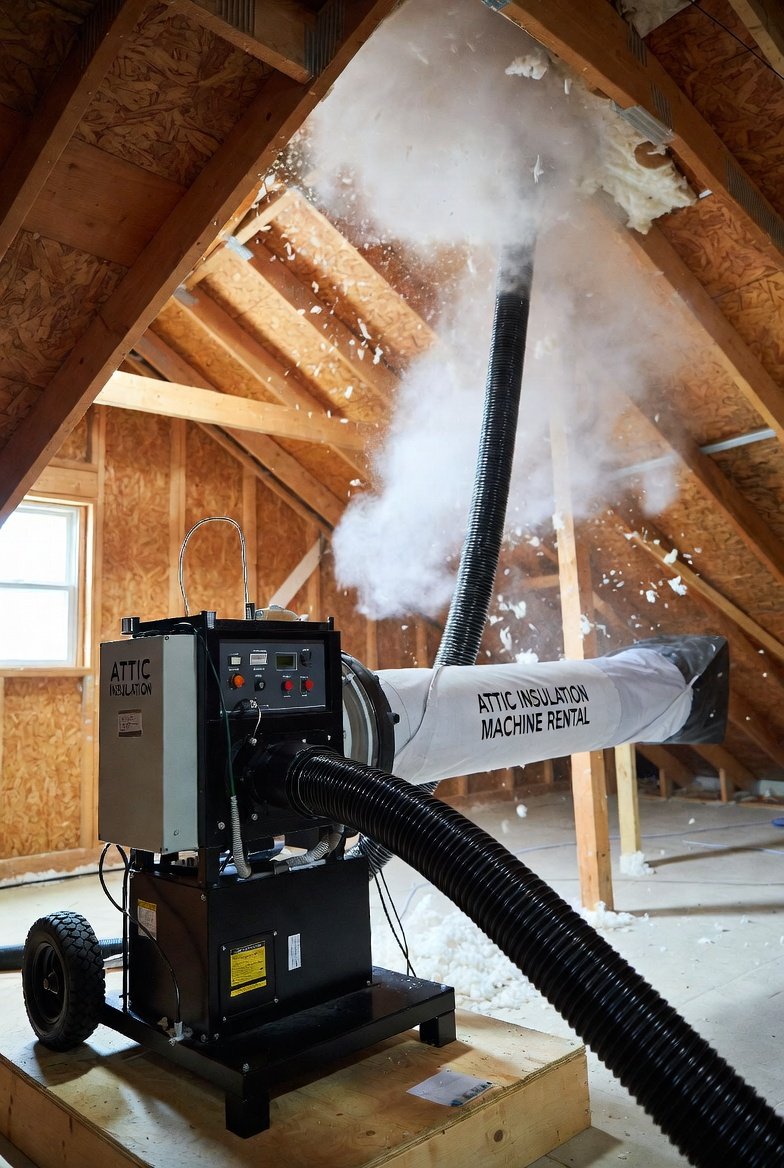
How to Blow Insulation Safely in Attic
Step 1 — Prepare Access
- Lay walking boards
- Ensure stable ladder setup
- Clear debris
Step 2 — Install Depth Markers
Reference R-value chart here:
Place markers at:
- Center
- Corners
- Near hatch
- Near eaves
Step 3 — Two-Person Workflow
Person A:
- Feeds hopper
Person B:
- Controls hose
- Maintains even coverage
Never attempt solo installation.
Step 4 — Blow From Farthest Corner
Work backward toward access.
Avoid trapping yourself behind insulation.
Step 5 — Verify Coverage
Re-measure 6–10 locations.
Correct thin spots.
Confirm soffit vents remain open.
Estimated Time to Complete
Attic Size | Time Estimate (2 People) |
800–1,000 sq ft | 3–5 hours |
1,200–1,500 sq ft | 5–8 hours |
1,800+ sq ft | Full day |
Add 1–2 hours for prep and cleanup.
Mini Case Examples
Case 1 — 1,200 sq ft, Simple Layout
- Single hatch
- Minimal recessed lights
- Dry insulation
- Two-person team
Rental makes sense.
Case 2 — 2,000 sq ft, Multiple Can Lights
- Tight access
- Numerous fixtures
- Mixed existing insulation
Contractor likely safer and time-efficient.
Pro Tips for Smooth DIY Rental
- Break insulation bags fully before feeding hopper
- Keep machine dry at all times
- Avoid tight hose bends
- Verify bag coverage as you go
- Plan for vacuum cleanup afterward
Mini Safety Checklist
- Gloves
- Eye protection
- Respirator (N95 or better)
- Proper footwear
- Stable ladder
- Confirm electrical safety
- Confirm ventilation pathways
Common Rental Machine Errors
- Clogging from damp material
- Overfeeding hopper
- Ignoring depth markers
- Blocking soffits
- Failing to finish within 24-hour rental window
Not Ideal If…
Do not rent if:
- Attic is damp
- Mold present
- Knob-and-tube wiring exists
- Recessed lights unverified
- Access unsafe
Rental is not problem-solving day.
Quick Verdict
Attic insulation machine rental works best for:
- Dry, accessible attic floor top-up
- Moderate size projects
- Homeowners willing to prep and verify
It becomes risky when complexity increases.
Savings come from preparation — not from the machine.