
Attic Insulation Contractors: How to Choose the Right Pro, Compare Quotes, and Avoid Low-Bid Traps
Hiring attic insulation contractors sounds simple until you learn the uncomfortable truth: the best job and the worst job can look identical from the attic hatch. Both can look “fluffy.” Both can look “thick.” Both can come with a confident invoice.
The difference is hidden in the things most homeowners don’t know to demand: air sealing, ventilation protection, edge coverage, and verification.
Most homeowners insulate their attic once. If the scope is wrong, you’ll live with the consequences for years—drafts that never fully disappear, rooms that stay stubbornly hot or cold, and the feeling that you paid for an upgrade that only half-worked.
Core principle:
Don’t hire an attic insulation contractor by price.
Hire them by scope.
What This Page Covers (and What It Doesn’t)
This guide helps you hire a contractor for attic floor insulation in a typical vented attic:
- How to vet contractors
- What questions to ask
- How to compare quotes
- Which red flags mean you should walk away
It does not cover wall insulation, crawlspaces, basements, or full home retrofit projects.
The One Contractor Filter That Beats Everything Else
If you only ask one question, ask this:
“Will you seal before insulating?”
ENERGY STAR is blunt:
If a contractor won’t agree to seal before insulating, call another contractor.
That’s not opinion. That’s a performance standard.
Contractor Reality: Why Two Quotes Can Be $1,500 Apart
Big price gaps usually come down to time.
Low bids often assume the fast path:
- Minimal sealing
- Quick blow-in coverage
- Thin edge and eave work
- No real depth verification
- Basic cleanup
Higher bids usually pay for the slow path:
- Seal first (don’t bury leaks)
- Protect soffits and vent paths
- Consistent coverage at edges
- Hatch treatment
- Verification and cleanup
This isn’t about honesty. It’s about labor — and labor costs money.
The 7 Behaviors Top Attic Insulation Contractors Share
1) They commit to “seal before insulating”
Air leaks buried under insulation stay leaks.
ENERGY STAR makes sealing first non-negotiable.
2) They protect soffit vents with baffles
Before installing fibrous attic floor insulation, baffles shall be installed at eaves adjoining vented soffits and extend at least 6 inches above insulation height.
Skipping baffles is a classic low-bid shortcut.
3) They put an R-value target in writing
A professional contractor specifies:
- Target R-value
- Insulation type
- How depth will be verified
No written target = no accountability.
4) They treat the attic hatch like a real leak
ENERGY STAR guidance includes:
- Weatherstripping hatch edges
- Insulating the back of the hatch/door
If they ignore the hatch, sealing talk may be superficial.
5) They verify depth and coverage
Low bids often blow fast and leave early.
Good contractors explain how they verify consistent depth, especially:
- Edges
- Eaves
- Around obstacles
6) They don’t dodge safety and conditions
They clearly explain:
- Access limits
- Wiring and safe movement
- Fixture clearances
- Moisture and venting risks
They don’t need to fix everything — they need to identify what affects scope.
7) They give you a scope you can compare
A professional quote is a description, not just a number.
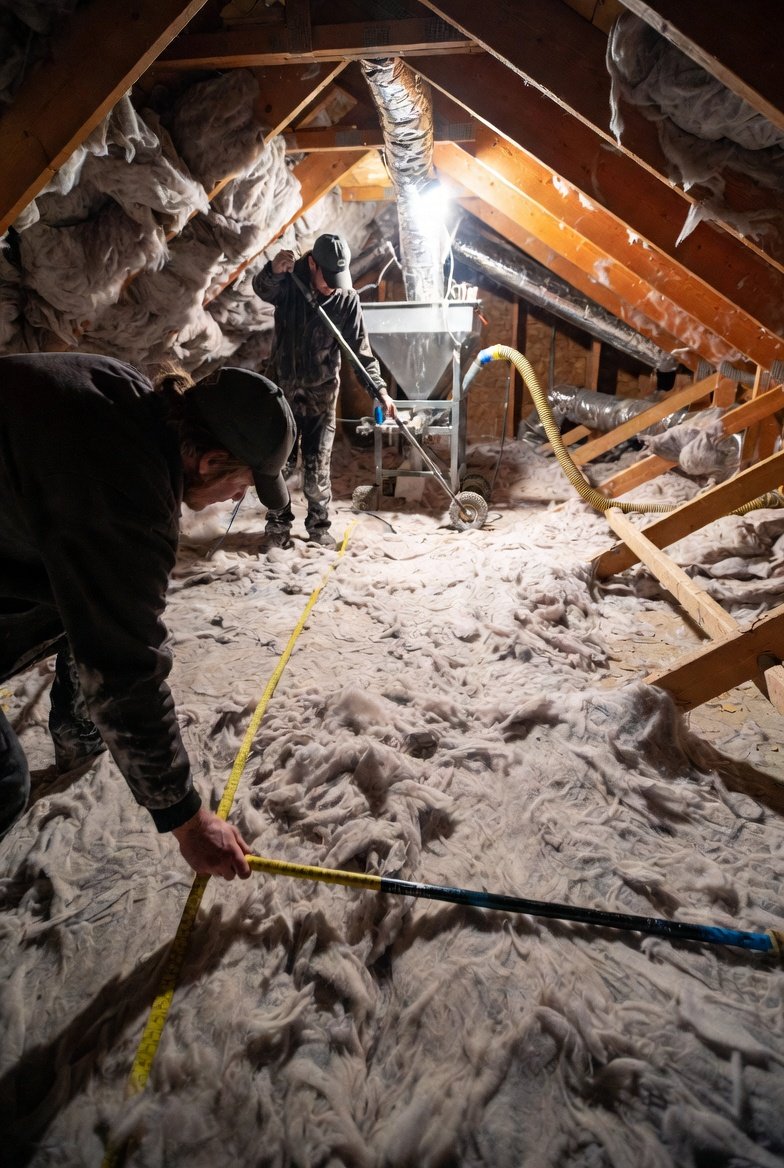
The Quote “Scope Lock” (Demand This in Writing)
To compare bids fairly, require these five items in writing:
- Target R-value
- Seal-before-insulating commitment + locations
- Vent protection plan (soffit baffles)
- Hatch treatment plan
- Depth verification method
If it’s not written, it’s not real.
The 10-Point Hiring Checklist
A) Scope & performance
- What R-value are you targeting, and why?
- Do you seal before insulating? Where?
- How do you protect soffit vents?
- How do you verify depth and coverage?
B) Materials & method
- What insulation type and why?
- How do you handle edges and obstacles?
C) Work quality
- What’s included vs add-on?
- How do you handle dirty or compressed insulation?
D) Credibility
- Licensed and insured?
- Workmanship warranty details?
Mistake → Consequence → Fix
Mistake:
Hiring based on lowest price per square foot and vague promises.
Consequence:
Fast blow-in, thin edges, buried vents, leaky hatch. Comfort improves slightly, problems remain.
Fix:
Only compare bids that include in writing:
- Target R-value
- Seal before insulating
- Baffles with clearance
- Hatch sealing/insulation
- Depth verification method
How to Compare Contractor Quotes (Fast Method)
Step 1: Force identical scope
Step 2: Audit the low bid for missing work
Step 3: Choose value, not price
ENERGY STAR emphasizes sealing and ventilation protection as part of real performance.
Red Flags That Mean Walk Away
- Refuses to seal before insulating
- No R-value in writing
- Dismisses baffles without inspection
- Quotes only price per sq ft
- Can’t explain depth verification
- Pressures you to sign early
Bottom Line
Hire attic insulation contractors by scope clarity.
Best overall:
Seals first, protects vents, treats the hatch, verifies depth, and writes it down.
Highest risk:
Vague low bid with missing scope.