
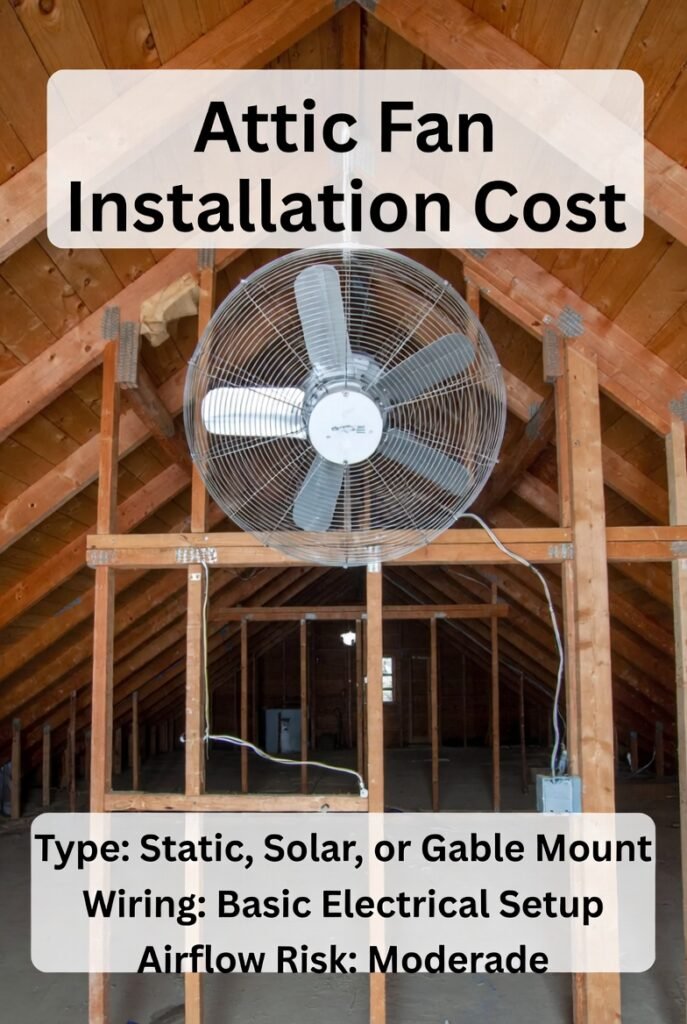
Attic Fan Installation Cost: What You’re Actually Paying For (And When It’s the Wrong Move)
Attic fan pricing is misleading online.
Most pages list a national average and stop there.
The real cost depends on:
- Fan type (roof vs gable vs solar)
- Electrical scope
- Roof pitch and access
- Intake capacity
- Whether this is replacement or new cut-in
- Whether your attic airflow is already balanced
Before we talk price, understand this:
A powered attic fan changes attic pressure.
Pressure changes affect airflow.
Airflow affects insulation performance and interior air leakage.
If intake isn’t verified, cost is the least of your concerns.
Start with airflow fundamentals:
attic ventilation tips
TL;DR — Typical National Installed Cost Ranges
Scope | Installed Range | What Drives It |
Replace existing roof fan | $450–$900 | Same opening + wiring |
New roof-mounted electric fan | $700–$1,500 | Roof cut + flashing + wiring |
Gable-mounted electric fan | $400–$1,200 | Framing + wiring |
Solar attic fan | $800–$2,000 | Panel + roof integration |
Intake modifications (if needed) | $300–$1,200+ | Soffit retrofits + baffles |
Ranges vary by roof complexity and electrical distance.
Cost Breakdown — Where the Money Goes
1️⃣ Fan Unit
- Basic electric: $120–$400
- Higher CFM models: $300–$600
- Solar units: $350–$900
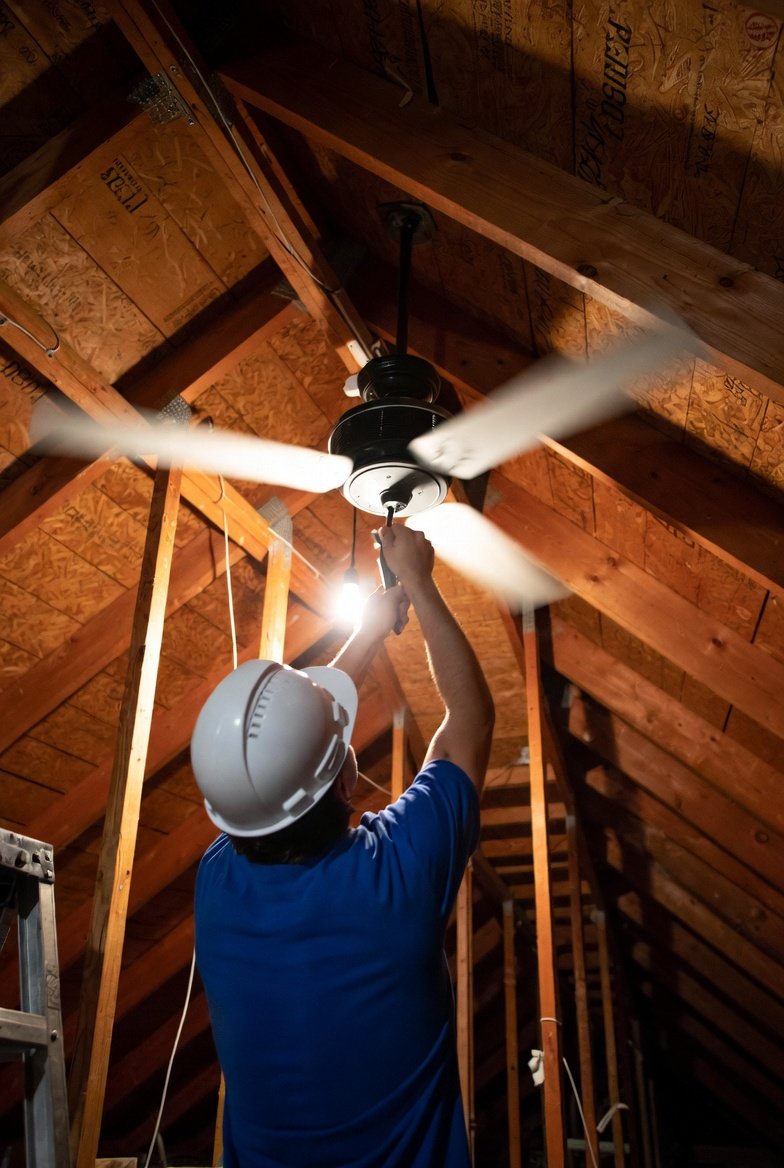
2️⃣ Roof Labor
- Cutting roof penetration
- Flashing + sealing
- Shingle integration
Higher pitch = higher labor.
3️⃣ Electrical Work
- Tie into existing junction
- Run new circuit
- Install thermostat/humidistat
Electrical can add $200–$800 depending on scope.
4️⃣ Intake Corrections
If soffits are blocked, adding a fan without intake correction is ineffective.
Baffles + soffit clearing add cost — but are often required.
Operating Cost (Often Ignored)
Electric attic fans typically draw between 100–500 watts depending on size.
If running multiple hours daily in peak season, there is additional electricity use.
It’s not massive — but it’s not zero.
Solar units avoid electrical draw but still require correct intake.
When an Attic Fan Makes the Problem Worse
This is the section most cost pages avoid.
Negative Pressure Risk
If intake is insufficient, the fan pulls air from:
- Interior ceiling penetrations
- Recessed lighting gaps
- Duct leakage
That can increase cooling load.
Backdraft Risk
In rare configurations, negative pressure can interfere with combustion appliances.
Humidity Migration
In humid climates, pulling exterior air aggressively can introduce moisture.
Fans are airflow multipliers.
Multipliers amplify design mistakes.
Fan Type Comparison Matrix
Feature | Roof Fan | Gable Fan | Solar Fan |
Roof penetration | Yes | No | Yes |
Electrical tie-in | Yes | Yes | No (usually) |
Visibility | Low | Visible from exterior | Low |
Intake dependency | High | High | High |
Cost range | Medium | Lower | Higher |
All require intake verification.
Climate Nuance
Cold Climates
Air sealing must precede powered fans.
Otherwise interior warm air may be drawn upward.
Check sealing basics:
attic air sealing
Hot-Humid Climates
Over-ventilation can increase humidity load.
Fans are not a moisture cure.
Mini Case Studies
Case 1 — Straight Replacement
Existing fan failed.
Same opening reused.
Total cost: mid-range.
Case 2 — New Install, No Intake
Fan installed.
Soffits blocked.
Result: minimal improvement until intake corrected.
Case 3 — Insulation Misdiagnosis
Home had R-19 insulation.
Heat complaint was insulation depth.
Fan unnecessary.
Check insulation depth here:
R-Value chart
Should You Install a Fan or Fix Passive Ventilation?
Situation | Recommendation |
Ridge + soffit balanced | Usually no fan needed |
No intake present | Fix intake first |
Roof replacement upcoming | Evaluate full redesign |
Extreme attic heat verified | Possibly |
Sometimes improving passive balance is better than adding a powered device.
Timeline Expectations
Project Type | Time Required |
Replacement | 2–4 hours |
New roof cut | Half day |
Complex wiring | 1 day |
Weather and roof access affect duration.
Maintenance and Lifespan
- Motor lifespan varies by quality
- Thermostats can fail
- Debris accumulation reduces performance
- Solar panel exposure affects efficiency
Fans are mechanical devices — not lifetime upgrades.
Not Ideal If
Do not prioritize a fan if:
- Air sealing is incomplete
- Insulation depth is below target
- Moisture source is roof leak
- Intake pathways are blocked
A fan should be the last step — not the first reaction.
Quick Verdict
An attic fan installation typically costs $400–$2,000 depending on scope.
But cost is secondary.
If intake is unverified, or insulation is inadequate, a fan may not solve your issue.
Fans move air.
They do not fix envelope failures.
FAQs
How much does attic fan installation cost
$400–$2,000 depending on fan type, wiring, and roof scope.
Does an attic fan lower cooling bills
It can under specific airflow conditions, but results depend on insulation depth and intake balance.
Is solar attic fan installation cheaper
Electrical cost is lower, but unit cost is higher.
Can I add a fan without soffit vents
Not recommended. Intake must be adequate.
How long do attic fans last
Motor lifespan varies; thermostat components may require replacement over time.
Is a permit required
Electrical permits may be required in some areas.