
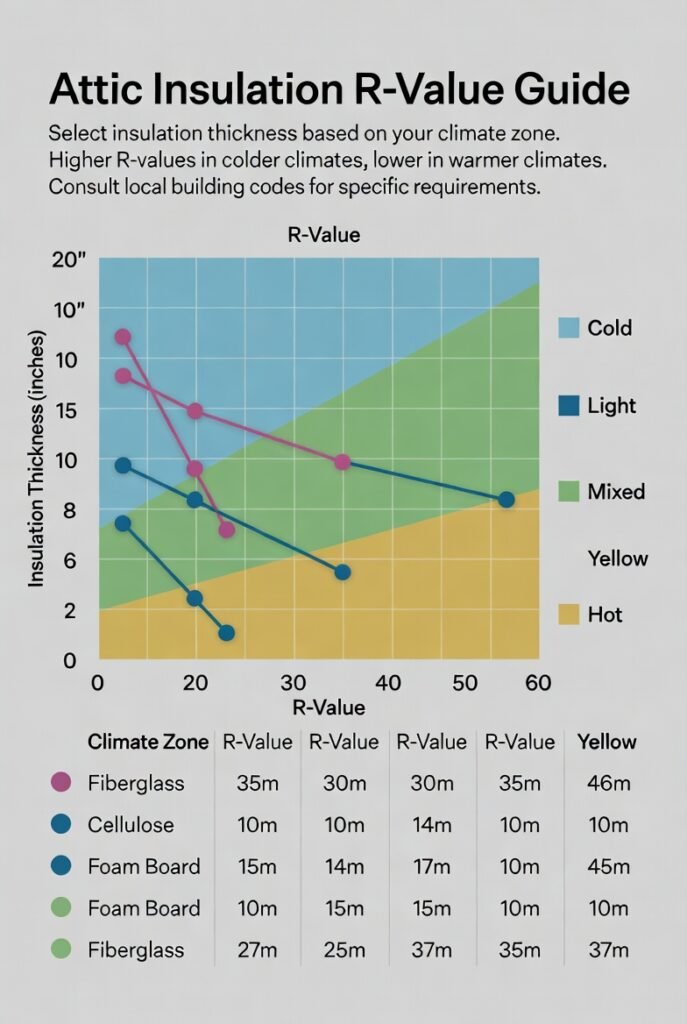
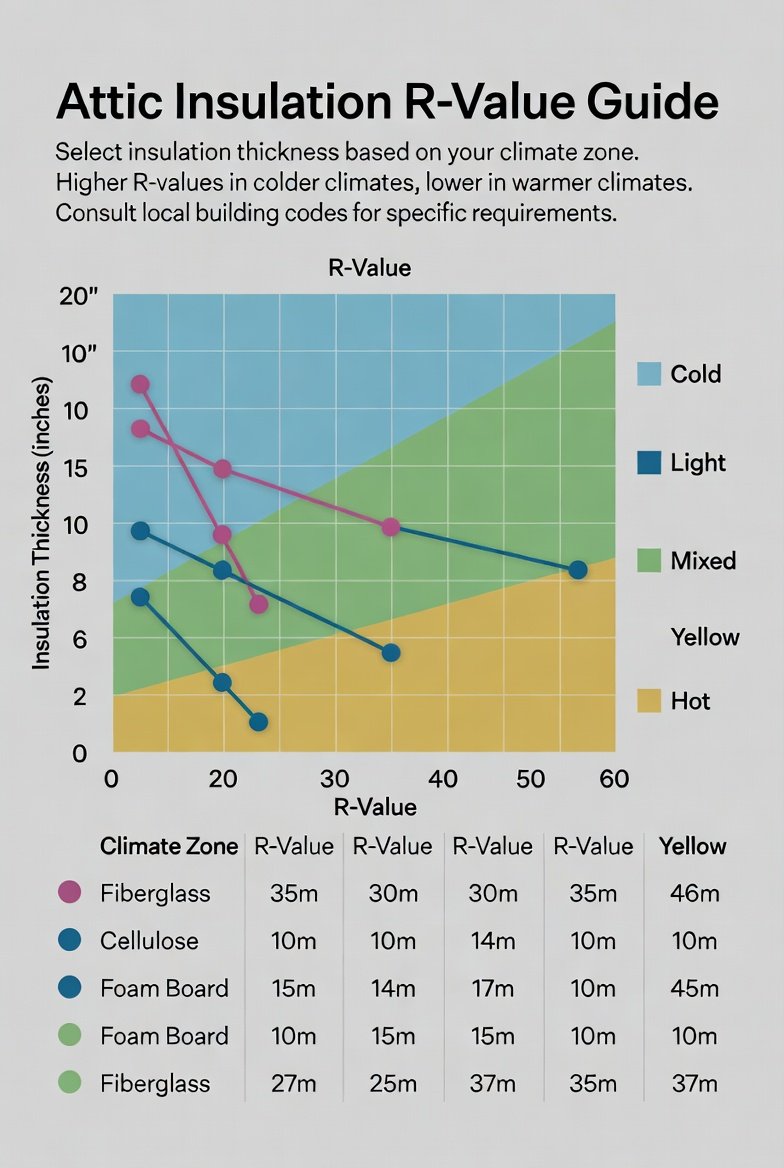
Attic Insulation R-Value Chart
If you are asking:
- What R-value do I need in my attic?
- How thick should attic insulation be?
- How deep is R38 or R49 blown insulation?
You are in the right place.
This guide provides:
- Climate zone R-value targets
- Thickness conversions (fiberglass & cellulose)
- R38 / R49 / R60 depth references
- Blown-in insulation depth charts
- Critical attic-only warnings
No hype. No fixed savings claims. Just code-aligned guidance.
What R-Value Do I Need in My Attic?
ENERGY STAR and DOE guidance generally recommend attic insulation levels based on climate zone.
Below is a simplified attic floor guidance table (vented attic).
Attic R-Value Chart by Climate Zone
Climate Zone | Recommended Attic R-Value |
Zone 1 | R30 – R49 |
Zone 2 | R30 – R60 |
Zone 3 | R30 – R60 |
Zone 4 | R38 – R60 |
Zone 5 | R49 – R60 |
Zone 6 | R49 – R60 |
Zone 7 | R49 – R60 |
Zone 8 | R49 – R60 |
These ranges reflect typical attic floor targets.
If unsure of your zone, check DOE climate zone maps.
How Thick Should Attic Insulation Be?
Thickness depends on material.
R-value is measured per inch.
Approximate R-value per inch:
Material | R-Value Per Inch |
Fiberglass (blown) | ~R2.5 – R3.2 |
Fiberglass (batts) | ~R3.0 – R3.7 |
Cellulose (blown) | ~R3.2 – R3.8 |
Thickness = Target R ÷ R per inch.
But density and installation quality matter.
R38 Attic Insulation — How Deep?
Fiberglass Blown (R2.7/inch average)
R38 ÷ 2.7 ≈ 14 inches
Cellulose Blown (R3.5/inch average)
R38 ÷ 3.5 ≈ 11 inches
R49 Attic Insulation — How Deep?
Fiberglass Blown
R49 ÷ 2.7 ≈ 18 inches
Cellulose Blown
R49 ÷ 3.5 ≈ 14 inches
R60 Attic Insulation — How Deep?
Fiberglass Blown
R60 ÷ 2.7 ≈ 22 inches
Cellulose Blown
R60 ÷ 3.5 ≈ 17 inches
Blown-In Attic Insulation Depth Chart
Target R-Value | Fiberglass Blown Depth | Cellulose Blown Depth |
R30 | ~11 inches | ~9 inches |
R38 | ~14 inches | ~11 inches |
R49 | ~18 inches | ~14 inches |
R60 | ~22 inches | ~17 inches |
These are approximate averages. Manufacturer charts should always confirm final depth.
Important: Settling Considerations (Cellulose)
Cellulose can settle slightly over time.
Proper dense-pack or installed depth must account for settling to maintain target R-value.
Low-density installs may underperform.
Vented Attic vs Roof Deck (Unvented Attic)
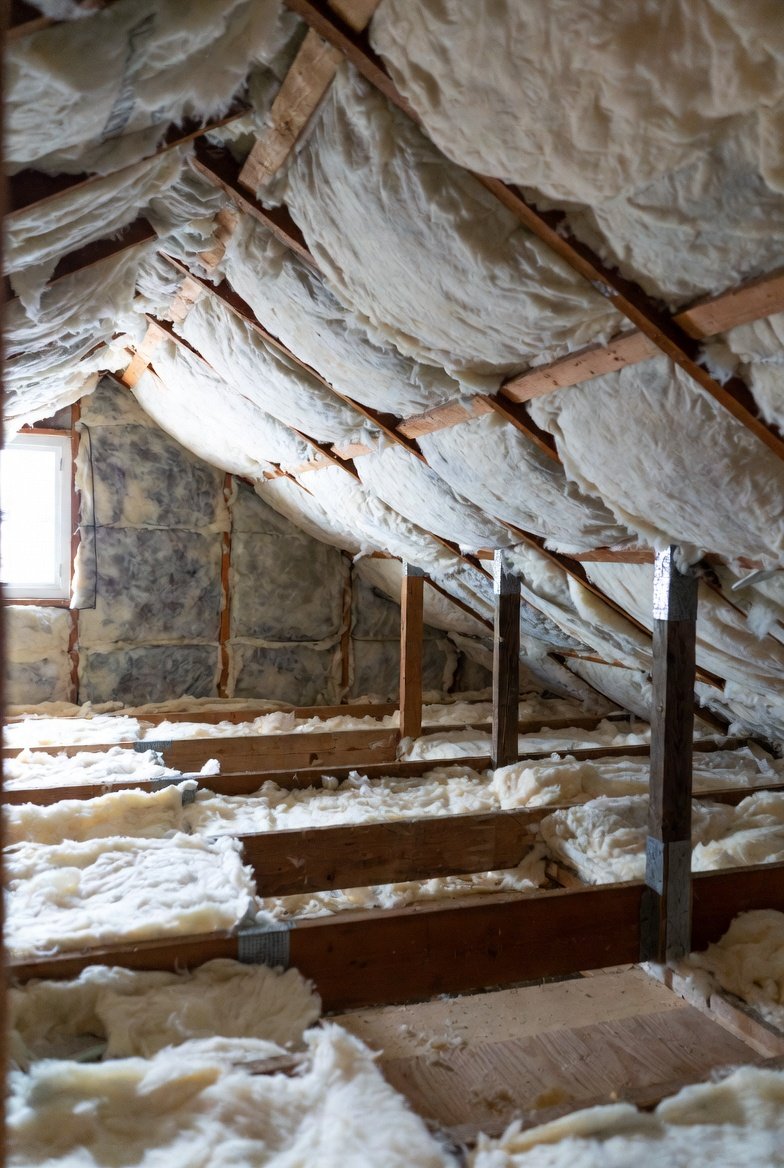
This page applies to vented attic floor insulation.
If insulating at the roof deck with spray foam, R-value requirements and thickness strategy change.
See spray foam comparisons:
open cells insulation
R-Value Does NOT Fix Air Leaks
Before adding insulation:
- Seal attic air leaks
- Seal top plates, wiring penetrations, light fixtures
- Address duct leakage
Air sealing guide:
attic air sealing
Insulation without air sealing reduces effectiveness.
Compression Warning (Fiberglass Batts)
Fiberglass batts lose effective R-value when compressed.
Example:
An R38 batt compressed into smaller cavity space does not perform as labeled.
Loose-fill often provides more consistent attic floor coverage.
ppppp
Wind Washing & Raised Heel Trusses
Wind entering eaves can reduce effective R-value.
Raised heel trusses allow full insulation depth at exterior walls.
Without proper baffles and air sealing, even R49 may underperform.
Ventilation basics:
attic ventilation tips
Is R30 Enough for an Attic?
In colder climates (Zones 4–8), R30 is typically below recommended attic levels.
In warmer climates, R30 may meet minimum guidance but not optimal levels.
Always confirm climate zone before deciding.
Best R-Value for Attic Insulation
There is no universal “best.”
The correct R-value:
- Meets climate zone guidance
- Fits available depth
- Maintains ventilation strategy
- Is installed over proper air sealing
Material selection guide:
best material
Decision Shortcut
If you are in:
- Zone 1–3 → Aim for at least R30–R38
- Zone 4 → R38–R49
- Zone 5–8 → R49 minimum; R60 preferred in many cases
If depth is limited:
- Cellulose may reach target R in less depth
- Raised heel trusses may be required
If upgrading an existing attic:
- Measure current depth
- Compare to target R
- Air seal first
Cost context:
attic insulation cost
Common Questions
How deep should blown-in attic insulation be?
Depth depends on target R-value and material. R38 typically requires 11–14 inches depending on material.
What is the R-value of blown-in insulation?
Fiberglass blown: ~R2.5–R3.2 per inch.
Cellulose blown: ~R3.2–R3.8 per inch.
Is R49 attic insulation worth it?
In colder climates, R49 aligns with guidance and improves thermal resistance when properly installed over air sealing.
How thick is R60 insulation?
R60 is roughly 17–22 inches depending on material.
Does adding more insulation always help?
Only if air sealing and moisture control are addressed first.
Final Reminder
R-value is a target.
Performance depends on:
- Air sealing
- Moisture management
- Proper depth
- Uniform coverage
- Ventilation balance
Thickness alone does not guarantee performance.